


Developing soft skills in the age of AI: from examples to real growth

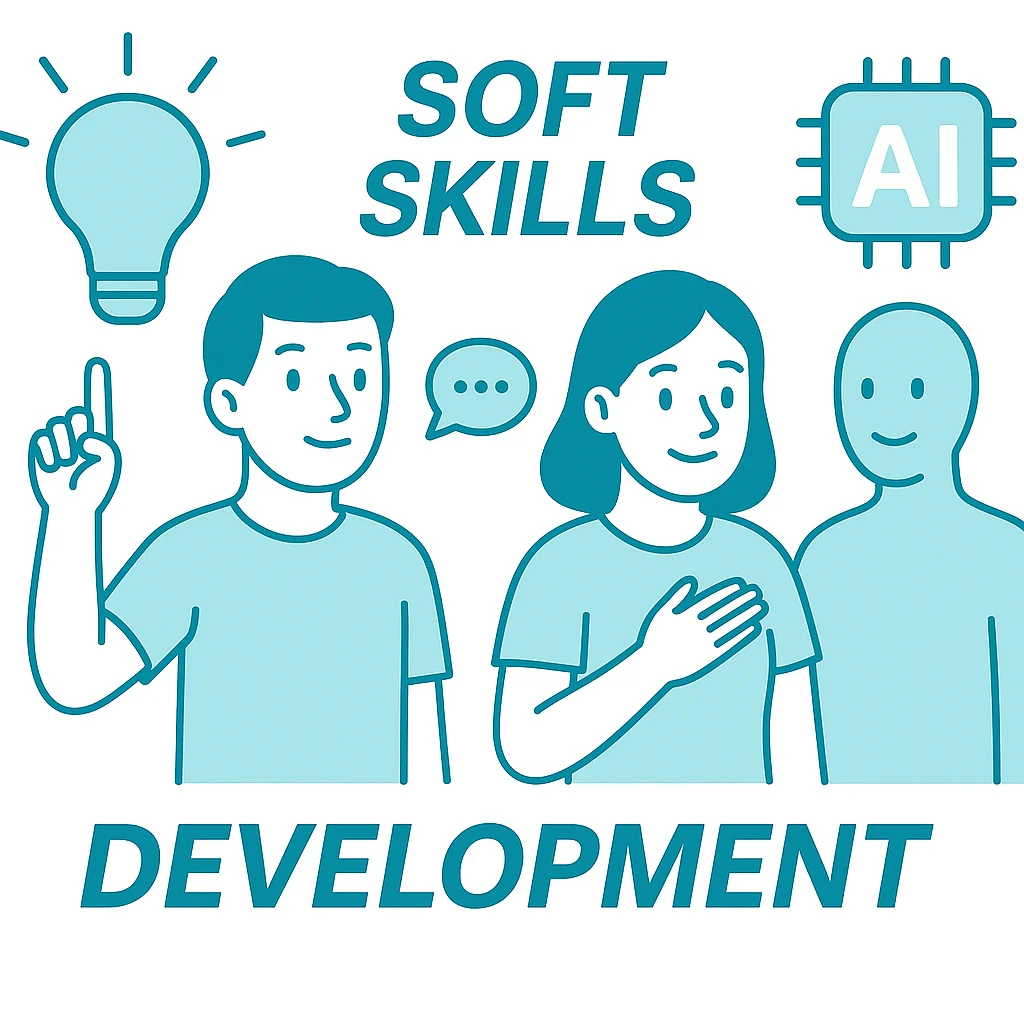
Soft skills are the invisible driving force behind effective collaboration, sales and strong leadership. Yet they are often overlooked compared to technical expertise. It is precisely these skills, however, that determine how someone communicates, deals with change and exerts influence within a team.
What exactly are soft skills?
Soft skills are personal skills that influence how you work with others and handle situations. Think of empathy, assertiveness, communication, collaboration, resilience and adaptability. They make the difference between someone who simply carries out tasks and someone who makes a real impact.
If you want to better understand which soft skills are currently in highest demand, take a look at this article by Michael Page. It highlights communication, critical thinking and emotional intelligence, amongst others, as key skills for the future.
Why soft skills are more important than ever
The workplace is changing faster than ever: technological developments, rapidly changing environments and the rise of AI demand people who can adapt and continue to communicate effectively. Soft skills are no longer a ‘nice to have’, but an absolute prerequisite for success. They determine how well teams work together, how quickly employees learn and how organisations respond to change.
Yet developing soft skills is not easy. You can read a book on giving feedback, but that doesn’t mean you can apply it effectively in practice. Or take a course on leadership, but it’s only in a real conversation that you realise whether your behaviour works.
Practising rather than just learning
Real development only happens when people can practise with situations that resemble their daily work. That is where PractAIce makes the difference. The platform allows users to have realistic conversations with AI avatars that listen, respond and challenge. This enables professionals to practise their soft skills in a safe environment.
Instead of just talking about feedback or conflict management, you actually do it by practising. You choose your own scenario, set personal learning goals and receive immediate feedback with concrete examples and areas for improvement. This makes soft skills tangible and applicable.
The power of AI in personal development
AI enables personalised practice. PractAIce uses insights from behavioural science to provide feedback that matches your learning style and goals. You can practise, reflect and grow step by step, with no limits. Every exercise feels unique, because the avatar adapts to your behaviour.
Want to know more about why these skills are crucial? Then read Michael Page’s article on the five most in-demand soft skills and discover how organisations worldwide are investing in them.

Examples of soft skills to develop
A number of skills are indispensable in virtually every organisation. Communication teaches you to listen, summarise and ask probing questions. Leadership is about providing direction and building trust. Emotional intelligence helps you recognise signals and respond with empathy. Collaboration requires dealing effectively with different personalities. Adaptability means staying calm and making conscious choices in times of change.
With PractAIce, you can practise each of these soft skills at your own pace, using scenarios tailored to your working environment.
From knowledge to behaviour
Soft skills are behaviours that make a difference in practice. They determine how you react in a difficult conversation, how you deal with tension, or how you build trust within a team. That is precisely why practice works better than theory alone. With AI role-plays in PractAIce, you can improve that behaviour, receive feedback, and improve step by step in situations that are truly relevant to your work.
In conclusion
Soft skills are increasingly the difference between performing well and truly excelling. With platforms such as PractAIce, employees can practise tomorrow’s skills today. This makes learning more personalised, more effective and, above all, more practical. Would you like to know how this works in your organisation?
See how AI avatars train soft skills at www.practaice.nl.