


Why leadership training only works if you practise in realistic, challenging leadership situations

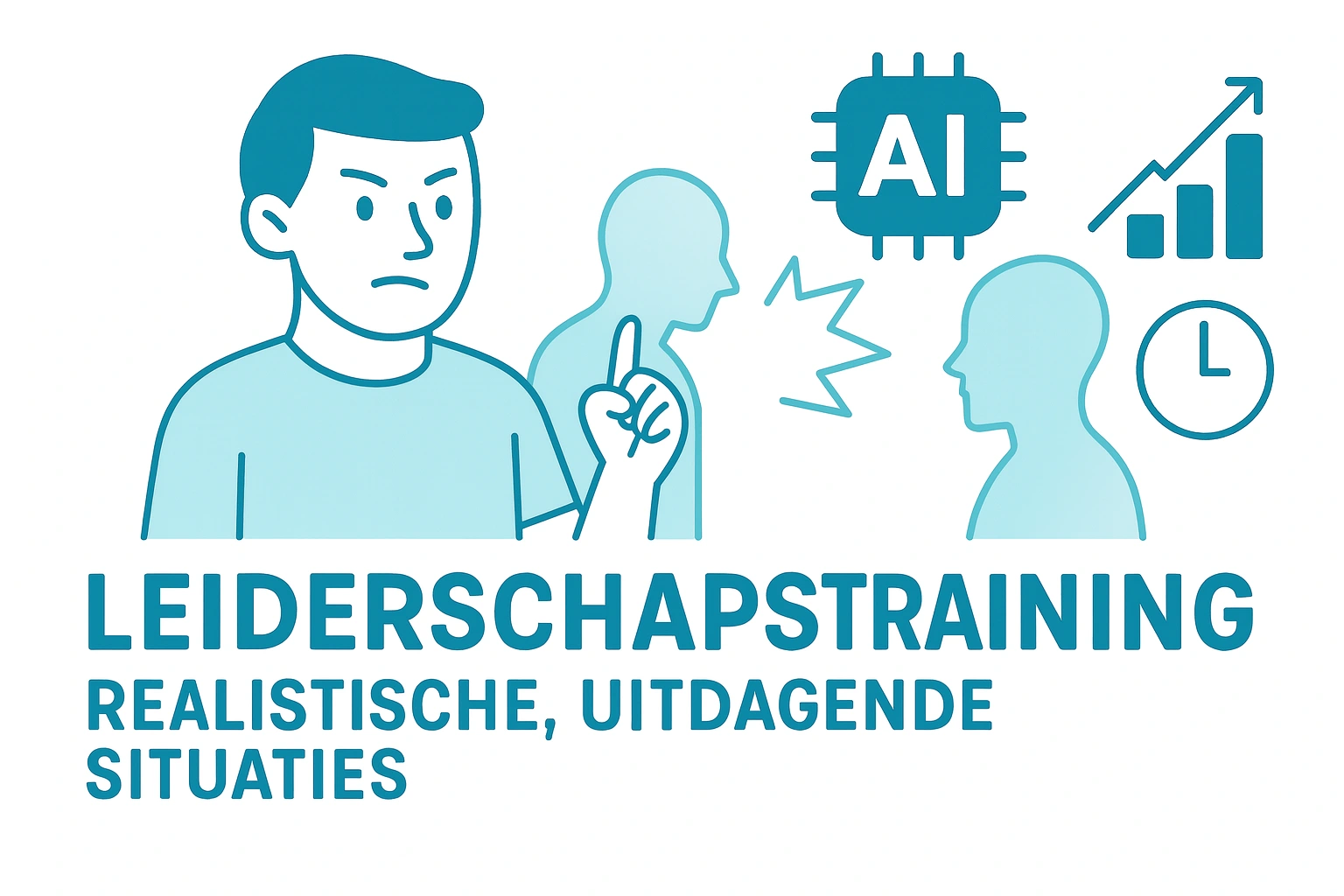
You don’t develop leadership simply by listening to theory or reading books. You develop it in the moments that really matter: when a team member gets stuck, when tensions rise during a meeting, when you have to deliver difficult news, or when you need to let go even though everything inside you is screaming to stay in control. It is in these situations that leadership becomes visible, tangible and measurable. That is precisely why leadership training only really works when you practise in situations that are just as challenging as your day-to-day reality.
Leadership requires switching gears: between context, people and yourself
Situational leadership
One of the most widely used models, that of Hersey and Blanchard, shows that there is no universal leadership style that always works. It is about being able to adapt. One employee needs clear direction, another thrives when given space. Sometimes you need to coach, sometimes instruct, sometimes just listen. Situational leadership is about recognising what a situation demands and acting accordingly.
Personal leadership
Then there is the layer of personal leadership: how you bring yourself to bear in your role, make choices and take control of your own growth. Covey’s seven habits illustrate this clearly. Acting proactively, setting priorities and having the discipline to understand before you react form a solid foundation for effective leadership. But these qualities only come to life when you apply them in real conversations and in situations that are just a little uncomfortable, because growth happens outside the comfort zone.
Why much leadership training doesn’t stick
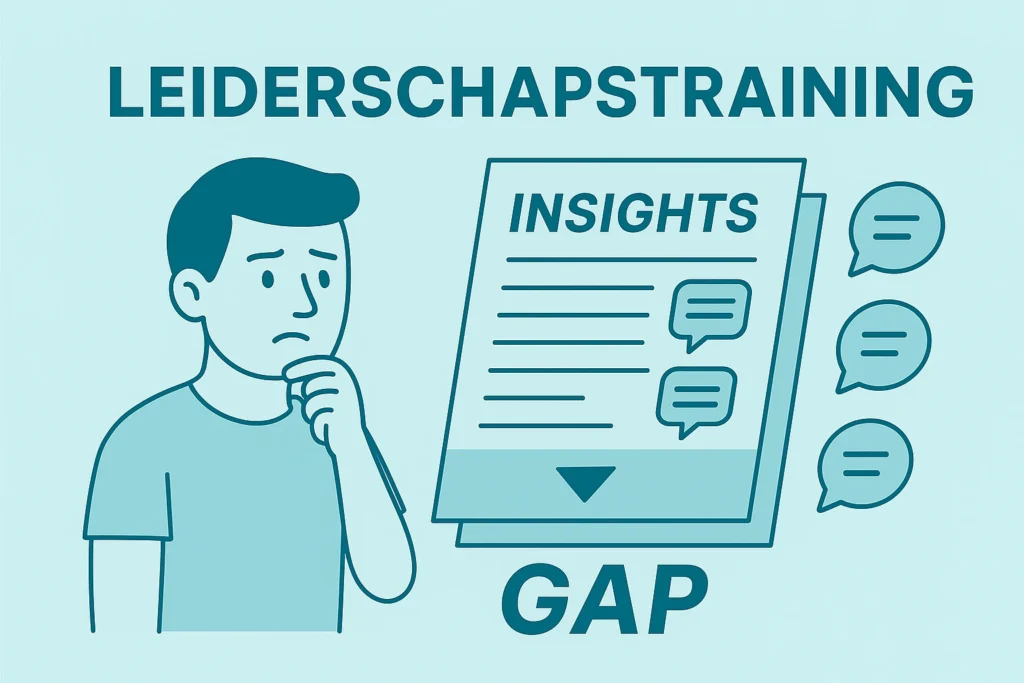
Traditional training courses provide insights, but often lack the element that truly changes behaviour: practising in situations that involve tension and cause discomfort. Leaders in particular recognise that difficult situations are never exactly like the example from the training. A conversation with an overworked employee feels different from a role-play. The moment when you have to give feedback is fundamentally different from filling in a form.
This creates a gap between knowing and doing. You know how it should be done, but in reality you end up reacting differently. Not because you don’t understand it, but because you haven’t practised it enough in a context that truly reflects your own situation.
AI finally brings realistic practice to leadership training
AI is changing the way professionals can learn. Not by replacing training, but by making practice realistic, personalised and repeatable. In an AI environment, you can simulate leadership situations that resemble your daily reality. The AI avatar reacts humanely to your choices, tone, reasoning and leadership style. You immediately see the impact of your approach and which alternatives would work better.
This makes practising accessible. You don’t have to wait for a role-play or a training day. You can practise whenever it suits you. And because the situations are realistic, you develop behaviour that is actually transferable to the workplace.
You learn to lead by doing, not just by talking.
Taking control of your growth as a leader
Effective leaders don’t wait for someone else to decide they need to develop. They take control themselves. That means: reflecting, practising, daring to make mistakes and being prepared to step outside your comfort zone. AI makes this development achievable within the reality of packed diaries, the daily grind and complex teams. With ten minutes of practice a day, you work on skills you would normally only encounter sporadically, such as dealing with resistance, conducting a rigorous appraisal or guiding a team through change.
PractAIce: training for leadership situations on your agenda tomorrow
This is where PractAIce makes the difference. Instead of generic role-plays, you can use the scenario builder to develop situations that fit your organisation, team and role perfectly. Think of conversations about performance, motivation, conflicts, workload, priorities, expectations or collaboration. The AI avatars respond to your leadership behaviour and provide feedback on the learning objectives and competencies you have specified, which is immediately applicable.
As a result, leadership development is not a one-off process, but an ongoing learning journey. You practise exactly what you need to apply tomorrow.
Conclusion
Leadership emerges through conversations. It’s about how you listen, provide direction, set boundaries, motivate and switch between styles. You don’t learn that just in a training room or from a book, but by practising it when things get tense and when the situation calls for it.
Anyone who truly wants to develop leadership skills needs realistic practice scenarios. AI finally makes these available. And PractAIce makes them personalised, challenging and directly relevant to your practice.
Would you like to discover what AI-supported practice can mean for leadership development within your organisation? Book a free demo. We’ll show you how to easily build customised scenarios and how leaders grow visibly and measurably in their behaviour.