


AI Feedback Training: why you can only give effective feedback if you practise realistic conversations

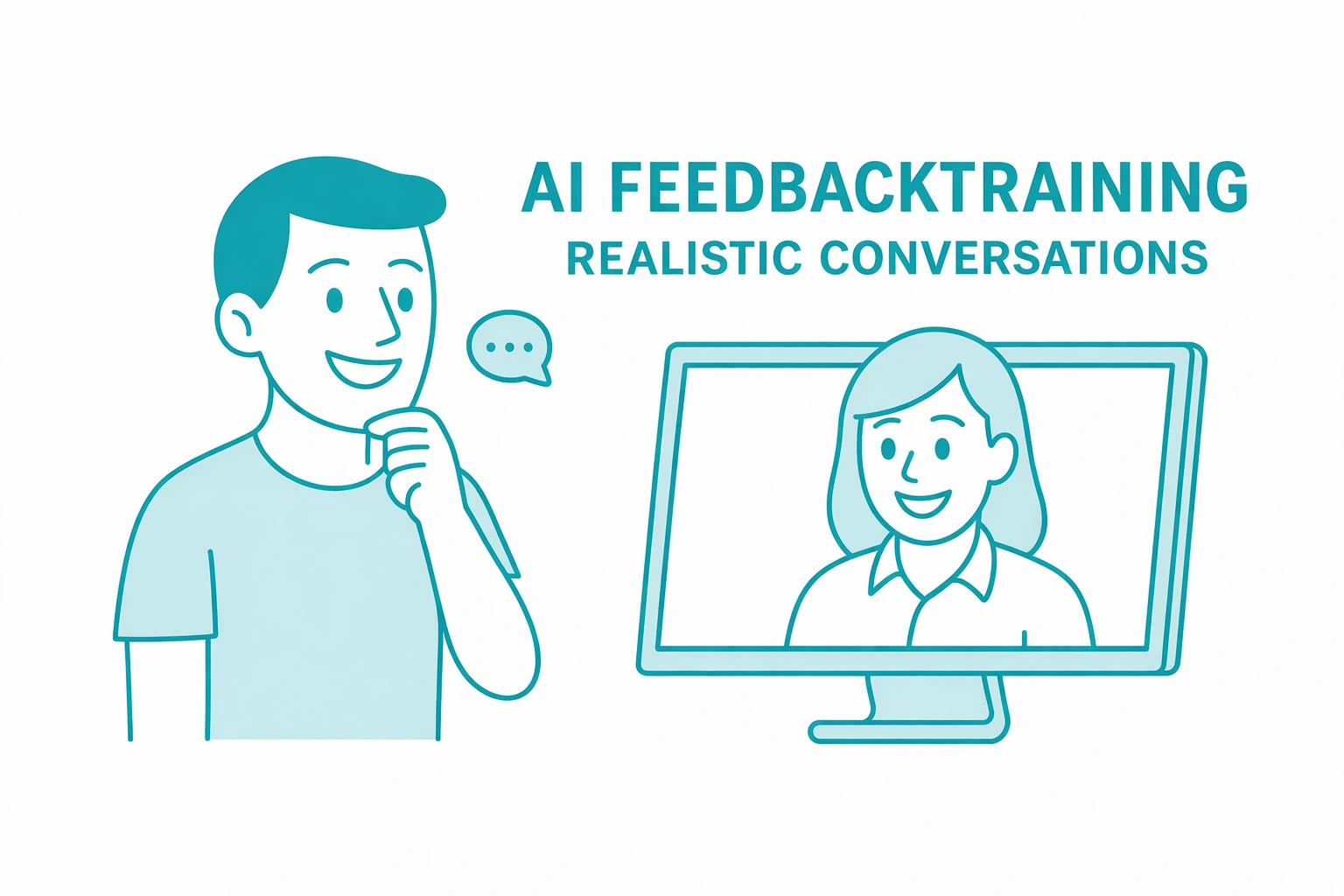
Feedback is one of the most powerful tools for growth, collaboration and performance. Yet in many organisations, it remains a source of tension. Employees find it difficult to be honest. Leaders avoid difficult conversations. Teams hold back to prevent conflict. And despite countless workshops, the quality of feedback remains inconsistent.
The crux of the problem: feedback is not a theoretical skill. It is an interaction. A conversation. It requires a great deal of courage and constant practice. And that is precisely why feedback training only really works when people practise in realistic situations that resemble their own everyday work.
Feedback isn’t about techniques, but about behaviour in the moment
Models such as the 4G method or SBI help, but in real conversations, much more comes into play: tone, timing, emotion, the relationship, expectations and context. You may know exactly what to say, but as soon as someone reacts defensively or feels attacked, the conversation changes completely.
That is why more and more organisations are looking to AI feedback training: a way to better learn how to deal with the complexity of real feedback conversations.
Why traditional feedback training often doesn’t stick
Many training courses provide structure and tools, but employees recognise the gap between training and reality. They get stuck because:
– role-plays feel safe, but aren’t realistic–
colleagues’ reactions remain
predictable– the emotions of real conversations aren’t replicated–
they only dare to give feedback when it’s
actually too late– there’s too little opportunity to practise with variation
Feedback is only difficult when it really matters. And that moment cannot easily be replicated in a training course or workshop. But AI is changing the rules of the game and, with it, the way professionals can practise giving feedback in situations that are closer to reality.
How AI feedback training makes the conversation more realistic
AI makes it possible to practise feedback situations that are just as nuanced and unpredictable as real-life scenarios. The AI avatar responds in a human way to your behaviour: your tone, your phrasing, your empathy, your directness. This creates a conversation that feels genuinely tense, yet is safe enough to experiment in.
Employees can practise:
• giving feedback to colleagues who are sensitive•
having conversations with team members who become
defensive• setting clear expectations for people who push
boundaries• giving constructive feedback without coming
across as harsh• delivering difficult messages without damaging the
relationship• receiving feedback without shutting down
AI makes feedback training personalised, relevant and endlessly repeatable.
Feedback is situational, and can therefore be practised for each scenario
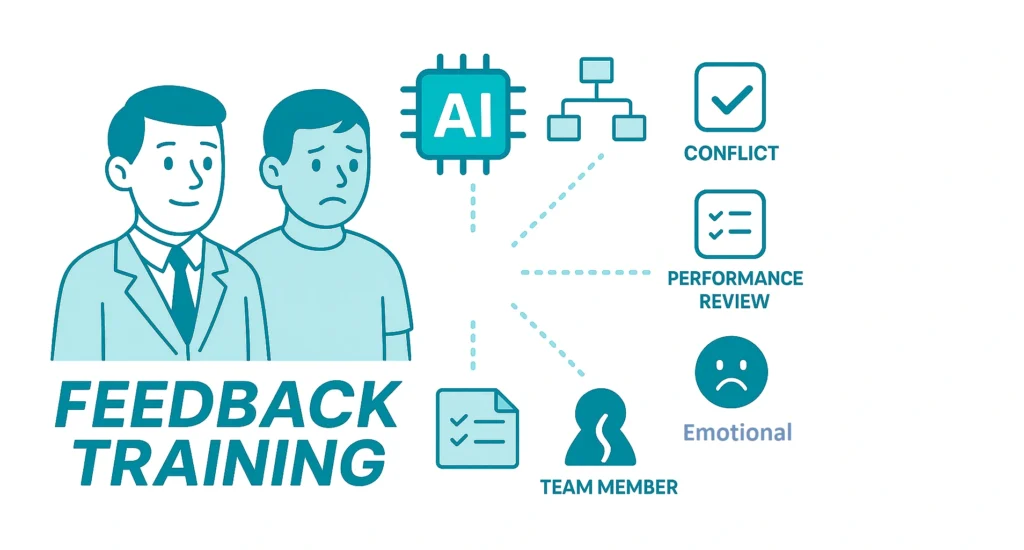
Giving feedback to a director or manager is different from giving it to a team member. Feedback in a conflict is different from that in a performance review. That is why a one-size-fits-all approach rarely works. Employees need scenarios that fit their role, dynamics and team culture.
With AI, you can practise any situation.
An employee who pushes boundaries?
An employee who fails to meet commitments?
A colleague who behaves inappropriately?
Someone who fails to meet commitments?
A colleague who withdraws or, conversely, is overbearing?
A team member who becomes emotional?
You can build and practise exactly that scenario, for as long as necessary.
PractAIce: practising with feedback in real-life situations
This is where PractAIce makes a big difference. With the scenario builder, organisations can create their own feedback scenarios: from difficult one-to-one conversations to challenging team discussions. The AI avatar is fully customisable, including emotions, resistance, communication style and typical reactions. This creates a practice conversation that is almost indistinguishable from the real thing.
In the personal dashboard, employees can see exactly how they are developing: tone, structure, impact, follow-up questions, empathy. This makes feedback development concrete, visible and continuous.
Why AI feedback training does change behaviour in the workplace
AI combines three elements that are crucial for behavioural change:
1. Repetition
You can keep practising scenarios until they feel natural.
2. Realism
The avatar’s reaction feels genuine, allowing you to see yourself reflected in it.
3. Immediate feedback
You can see straight away which behaviour works and what causes tension.
This ties in with what behavioural science has been showing for years: people don’t change through knowledge, but through experience.
Conclusion: feedback improves when you practise the conversations
Every organisation wants a culture where people communicate openly, honestly and professionally with one another. But that culture isn’t created by rules, communicating core values, or posters. It’s created through conversations. The conversations that are nerve-wracking. The conversations you’d rather put off. The conversations where feedback makes all the difference.
If you really want to improve feedback, you need to practise in realistic contexts. AI makes that possible. And PractAIce makes it personal, safe and immediately applicable.
Would you like to explore how AI-supported practice can strengthen your feedback culture? Book a free demo. We’ll show you how to build bespoke scenarios and how teams make noticeable progress in their communication and collaboration.www.practaice.nl