


8 steps to becoming a better salesperson

You don’t have to be a born salesperson to become good at sales. Not at all. What do you need? The ability to reflect, the willingness to practise, and the right tools to grow.
At PractAIce, we support sales professionals every day who want to improve in their field. Not by opening yet another book on ‘influencing techniques’, but by doing. By making mistakes. By learning. And that process usually starts with one simple question: what can I do better today?
In this blog, I’ll take you step by step through the growth path we most often see in salespeople who are set to make a real difference and achieve better results.
1. Know where you stand
You can only grow if you know where you stand and where you need to develop. Which conversations are already going well? Where do you get stuck? What do you find difficult? What feedback do you hear most often? Many people overestimate their strengths and fail to see their blind spots. That’s why we don’t work with vague scores, but with observation. By practising conversations with AI avatars, reviewing or reflecting on real-life cases, you’ll truly see why you react the way you do – in other words, where your behaviour comes from. And what the effect is.
2. Learn to recognise who you’re dealing with
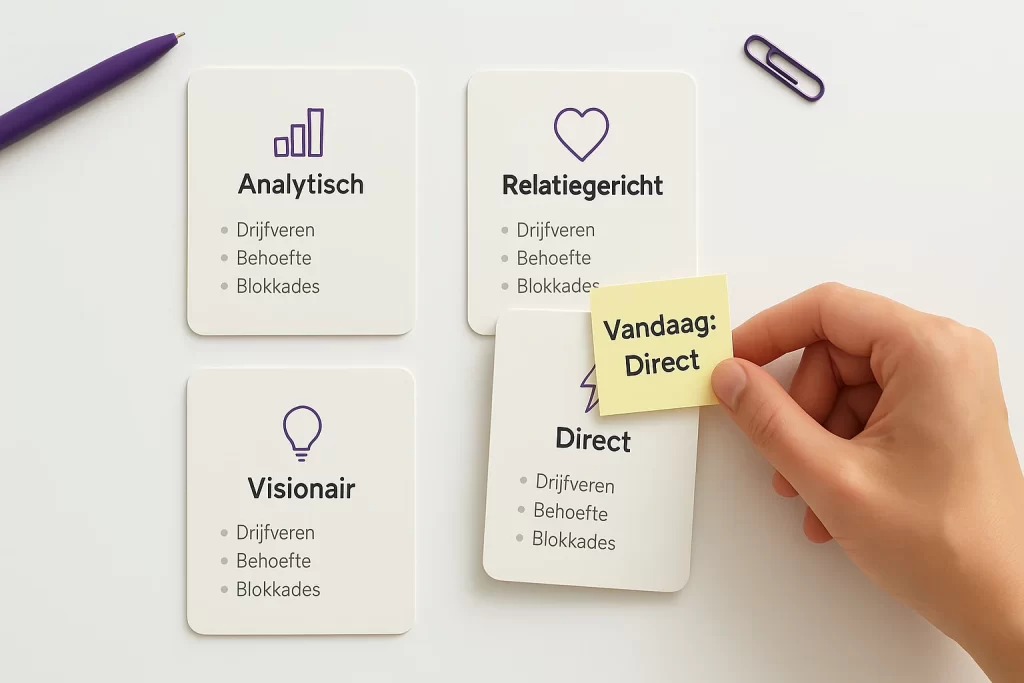
Not every customer thinks the same way. Some customers need clarity and structure, whilst others want to move quickly. Successful salespeople can switch between styles and customer types, enabling them to connect in any situation and close more deals
It starts with recognition: who is sitting opposite you? What drives this person? What do they value and what are their needs? What is holding them back? Our competency-based training helps you learn to read that behaviour and respond to it effectively.
3. Dare to let go of your script
Many salespeople cling to scripts or step-by-step plans. That makes sense, because it feels safe. But in practice, customers often lose interest if things feel ‘too smooth’ or ‘too rehearsed’, or if their needs aren’t being met.
What you need is flexibility. Knowing where you want to go in a conversation, but also feeling the freedom to deviate if the situation calls for it. You can only learn that by practising with unpredictable situations. For example, with an AI customer who doesn’t react by the book.
4. Practise the conversations that really matter
Do you want to get better at handling objections, upselling or closing a deal? Then that’s exactly what you need to practise. Not just ‘sales conversations’ in general, but the moments that make a difference in your day-to-day work.
At PractAIce, you choose or create scenarios that suit your role and your customers. Such as explaining a price increase to a regular customer, or convincing a prospect who has already said three times: “I need to think about it a bit more.” You practise with an AI that responds, listens, and challenges you to do better.
5. Build in a routine
A single training session won’t change you. It’s the repetition that makes the difference. The salespeople who grow the fastest are those who practise consistently. Weekly. Briefly. Focused.
With us, you often see people suddenly practising consistently, simply because it’s easy to fit in. No travel time. No colleagues listening in. Just five to ten minutes of real practice, whenever suits you.
6. Practise your words, because they make all the difference
Sales is all about trust, so what do you say, how do you say it, and what do you leave unsaid? Which words do you choose? When should you use the power of silence or ask questions to clarify buying signals? Communicating persuasively and developing commercial skills are complex for many, partly because every customer is different.
That’s why, in our soft skills training, you can practise commercial skills such as listening, probing and persuading with different customer types. You can set the customer types yourself so that you get a highly realistic scenario that truly reflects real-life situations.
6. Train your words – because they make all the difference
In sales, it’s all about what you say and how you say it. Which words do you choose? How do you phrase your question? Do you get to the point, or do you ramble on for too long? With PractAIce, you practise exactly that: the language that persuades, the timing that works, and the phrasing that moves a customer forward. Because the right words open doors.
7. Ask for feedback you can understand
“Well done” or “you were a bit unclear” won’t get you anywhere. You only grow when you receive clear feedback on specific behaviour. That’s why at PractAIce you always receive feedback based on your choices during the conversation. Using quotes from your own conversation, we show you what went well, what could have been better, and how you could have phrased it differently. These are practical examples you can apply straight away.
And that makes it very clear: What did you do well and why? Where did you miss an opportunity and how can you avoid that next time? And what can you do differently next time to maximise the impact?
8. Stay curious
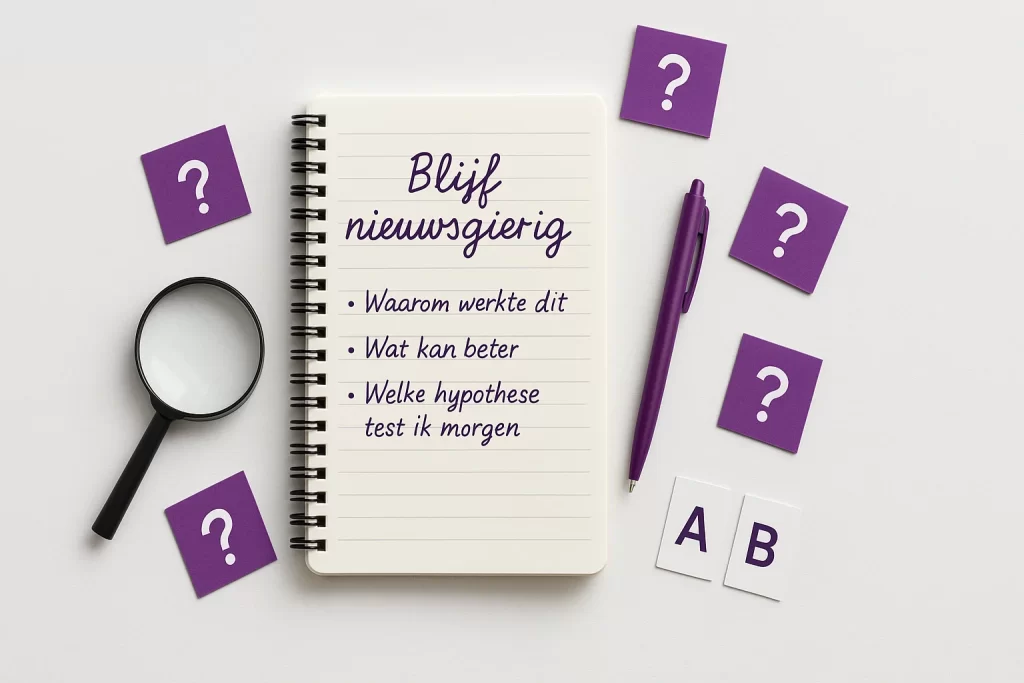
The best salespeople we know are curious. Not just about the customer, but about themselves too. They want to understand why something works, or why it doesn’t. They experiment. They ask questions. They dare to say: “This is new to me, but I want to learn it.”
At PractAIce, we foster that same mindset. Because you can practise in a safe environment, you build confidence. That makes learning more enjoyable, especially when you notice in practice that your conversations are improving and that you’re closing more deals as a result.
Frequently asked questions about improving your sales skills
Is this for beginners or advanced learners?
Both. Our tools and training courses scale with you. Novice salespeople learn the basics faster. Experienced professionals refine their approach and sharpen their instincts.
How do I know which steps to take?
With our conversation designer, you determine the steps yourself. You create your own role-play, choose the competencies and learning objectives that suit you, and put together a persona. In your personal dashboard, the AI coach then provides guidance, so you can see exactly which skills you can develop further.
Can I combine this with coaching or classroom training?
Absolutely. Our AI training courses are actually ideal as a supplement. They provide routine, practical experience and measurable results alongside other learning methods. We don’t offer classroom-based training ourselves, but we work with partners who do. This means you can combine both effectively.
Can I also combine this with coaching or classroom training?
Absolutely. Our AI training courses are ideal as a complement. They provide routine, practical experience and measurable results. We do not offer classroom-based training ourselves, but we work with partners who do. This allows you to combine both effectively.
Is this suitable for teams or just for individuals?
Both. Teams gain insight into shared learning objectives, whilst individuals train at their own level and work on their individual learning objectives. The platform is scalable and flexible.
How soon will I see results?
Often within a few weeks. Because you apply what you learn straight away, you’ll quickly see the effect in real conversations and in your personal dashboard, which provides a clear overview of your progress.
Ready to take the next steps?
Improving your sales skills starts with you. With practising. Observing. Adjusting. And trying again. Not just by reading or listening, but by doing. Want to find out how you can go about it? Book a demo and see for yourself how our AI training courses can accelerate your development. Or get in touch straight away for a no-obligation introductory meeting.