


Measuring and improving soft skills with AI: hype or breakthrough?

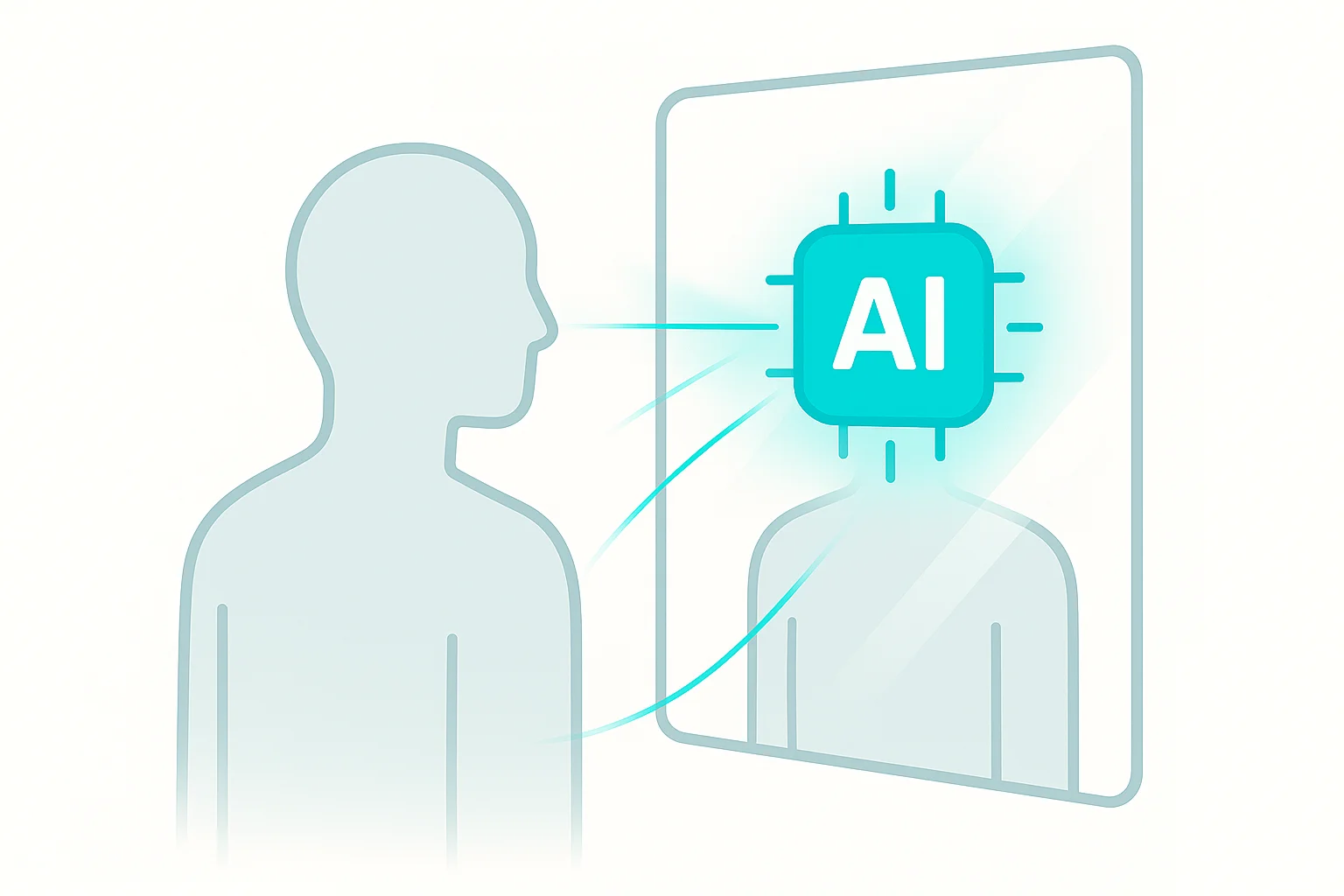
Empathy. Listening. Giving feedback. Setting boundaries. These are the sort of skills that everyone considers important, but which are rarely defined in concrete terms. After all, how do you know if someone is a ‘good listener’? And how do you measure empathy without relying on gut feeling or intuition?
That’s where AI comes in. Or rather: walks in. Because more and more organisations are using artificial intelligence not only to train soft skills, but also to measure them. But does it really work? Or is it mainly a nice promise that sounds good on a PowerPoint slide?
At PractAIce, we believe it does work. Not because it sounds trendy, but because we see it happening every day with our users. Employees who suddenly communicate more consciously. Coaches who refine their feedback. Teams that collaborate more smoothly. And all of this through targeted, AI-driven practice and feedback.
Why soft skills training isn’t optional
For a long time, we thought: technical skills can be trained, but soft skills… you just have to have a natural aptitude for them. But we now know better. Soft skills determine how well someone functions in a team, how effective your leadership is, how you handle conflicts and how you perform under pressure.
And that is precisely what makes it worthwhile to measure these skills properly. After all, why wait until a conflict escalates or a team hits a rough patch, when you can intervene earlier? Through competency-based training, PractAIce offers you the tools to make soft skills visible, and thus improve them in a targeted way.
How does soft skills training with AI work?
Very different from a classroom course. And thank goodness for that. At PractAIce, you simulate conversations with a smart AI that adapts to your communication style. You’ll face difficult colleagues, emotional feedback sessions or customers who cross your boundaries. Situations that feel real, precisely because the AI reacts to what you say, not to a fixed script.
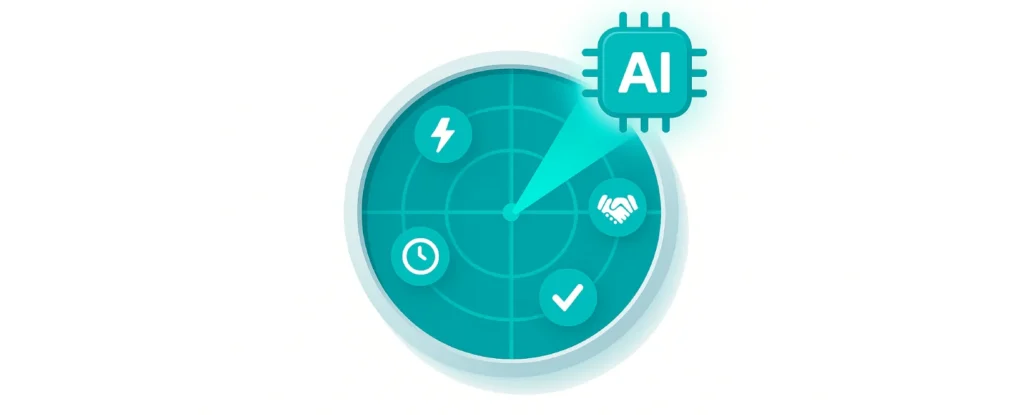
After each conversation, you receive immediate, detailed feedback. Not just on what you said, but also on how you said it. Was your tone convincing? Did you really listen? Did you recognise emotions? Did you steer the conversation towards a solution? Everything is measured, translated into insights and fed back into your personal dashboard. Curious to see what that looks like? Book a demo and try it for yourself.
What can you measure with AI?
More than you think. AI doesn’t look at general impressions, but at measurable behavioural indicators. Think of:
- Number of open-ended versus closed questions
- Recognising emotions in a conversation
- Responding to resistance or silences
- Clarity and structure in your message
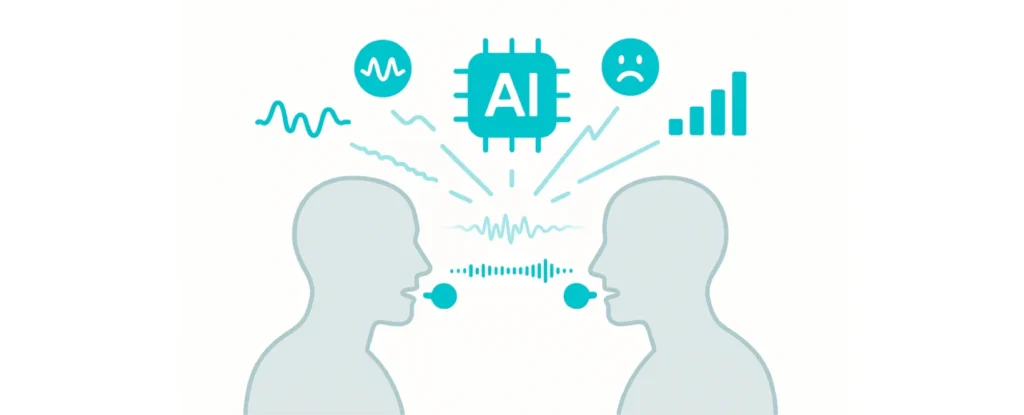
- An eye for non-verbal cues (such as hesitation, tension)
All these signals are recognised by the AI and translated into insights you can use. And because everything is measured consistently, you can also track over time how you’re growing, or where you’re getting stuck. That suddenly makes training soft skills just as concrete as learning Excel or programming languages. And that’s not hype, that’s just smart.
Measuring soft skills within a team
It’s not just individuals who benefit from this approach. Organisations also use PractAIce to identify broader patterns. Which competencies are already well-represented within a team? Where are the blind spots? How do departments perform relative to one another when it comes to communication, leadership or collaboration? Once you’ve mapped out soft skills, you can also start building in a targeted way. For example, with tailored learning pathways per team, or coaching on specific themes such as feedback culture or conflict management. Feel free to take a look at our page on soft skills in training to see what’s possible.
Frequently asked questions about soft skills and AI
Can soft skills really be measured objectively?
Not 100%, but much better than relying on gut feeling. AI looks at specific behaviour in simulated conversations and provides feedback based on that. This is often more reliable than subjective observations.
Is this suitable for all job levels?
Yes. Are you just starting out as a junior? Or are you a manager with twenty years’ experience? The system adapts to your level.
Is there also scope for creating your own scenarios?
Certainly. You can create industry-specific situations yourself or adapt existing conversations. This makes the training even more relevant.
What about privacy?
PractAIce is fully GDPR-compliant. Conversations and data are accessible only to the user (and, if desired, to HR or a coach, with permission).
Is this also suitable for remote teams?
Exactly. Because you can practise at any time, it’s ideal for organisations with hybrid or international teams.
Measuring soft skills with AI: hype? No. A clear competitive edge.
We’re not going to claim that measuring soft skills with AI solves everything. You still need people who are willing to learn, teams that are open to feedback, and organisations that take it seriously. But if you have all that? Then this is the tool that makes all the difference. Want to know what this looks like for your team, or just want to get started yourself? Book a demo or read more about us. Soft skills are too important to ignore, and now too valuable not to measure.