


How AI makes soft skills training more personalised, effective and realistic

Soft skills are at the heart of modern leadership: communicating, listening, collaborating, setting boundaries, managing conflict and showing empathy. Yet many professionals struggle when they have to apply these skills in real-life situations. Not because they don’t understand the theory, but because they haven’t practised the behaviour enough. This is precisely where artificial intelligence is making a breakthrough: AI makes soft skills training more personalised, realistic and effective than ever before.
You don’t learn soft skills by talking about them, but by experiencing them in real-life interactions
In many organisations, soft skills training remains stuck in one-off sessions and generic exercises that do not reflect the complex situations in which people actually need these skills. The challenge is that these skills are almost always situational. Every person reacts differently. Every conversation has its own context. And the tension of the moment influences your behaviour more than what you learn from a book or a training course.
That makes soft skills, just like leadership, difficult to truly train. You cannot simulate every difficult situation in a group training session. You cannot play endless role-playing games. And you cannot practise at the very moments when you need it most.
Soft skills require experience, not just knowledge.
Why AI is a breakthrough in training human behaviour
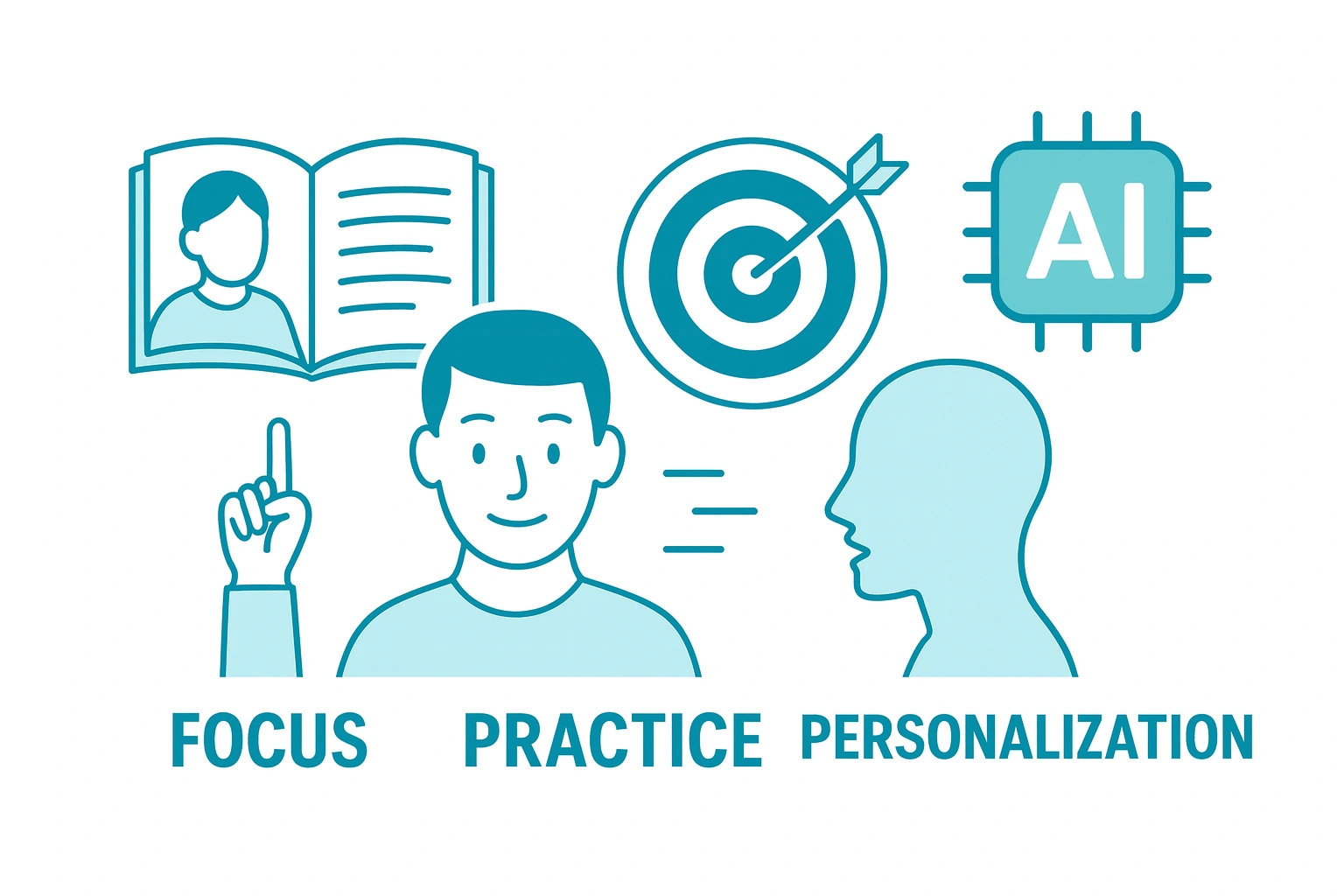
AI is changing the way professionals learn soft skills. Not by replacing training courses, but by making practice more realistic, personalised and repeatable. Where traditional training stops, AI starts to deliver value.
AI-based practice scenarios make it possible to:
• conduct conversations that resemble your real working
environment• experience how your choices influence a
dialogue• receive feedback that is specific, not just general tips•
practise without time pressure or social anxiety•
try out and compare different styles and responses
This is precisely why AI has such an impact on soft skills development: it makes behaviour visible, understandable and trainable.
Soft skills are situational, context-dependent and personal
One of the key insights from modern learning is that soft skills do not consist of a single universal approach. The same conversation technique works differently with an angry customer than with a nervous colleague. A feedback conversation requires different skills to a coaching conversation. And showing empathy means something different to everyone.
That is why generic training is only of limited use. Professionals need training scenarios that are tailored to:
• their role•
their team•
their industry•
their challenges•
their personality
AI makes this customisation possible. The technology simulates realistic scenarios and responds to nuance, attitude, reaction and intention. As a result, soft skills training finally becomes just as personalised as the situations in which you need these skills.
The psychological benefit of practising with AI avatars
Human interaction is complex. In a real conversation, you only get one chance. In an AI training scenario, you can repeat, pause, rewind and start again. This lowers the barrier to entry significantly. Professionals suddenly feel confident experimenting with new approaches, without the fear of hurting someone or making a mistake.
The result is faster, safer and more in-depth learning. You take risks that you would avoid in real life. You try out new styles. You see the immediate effect of your communication choices.
This makes soft skills not only learnable, but also measurable.
What AI brings to leadership development
Soft skills and leadership are closely linked. A leader who cannot listen, coach, motivate or set boundaries will sooner or later lose their effectiveness. AI helps leaders with:
– feedback
sessions– appraisal
interviews– conflict
resolution– team
coaching– more effective meetings–
conversations involving resistance
In every situation, the professional learns not only what to do, but above all how the conversation works when it gets real.
PractAIce: training soft skills in scenarios tailored to your practice
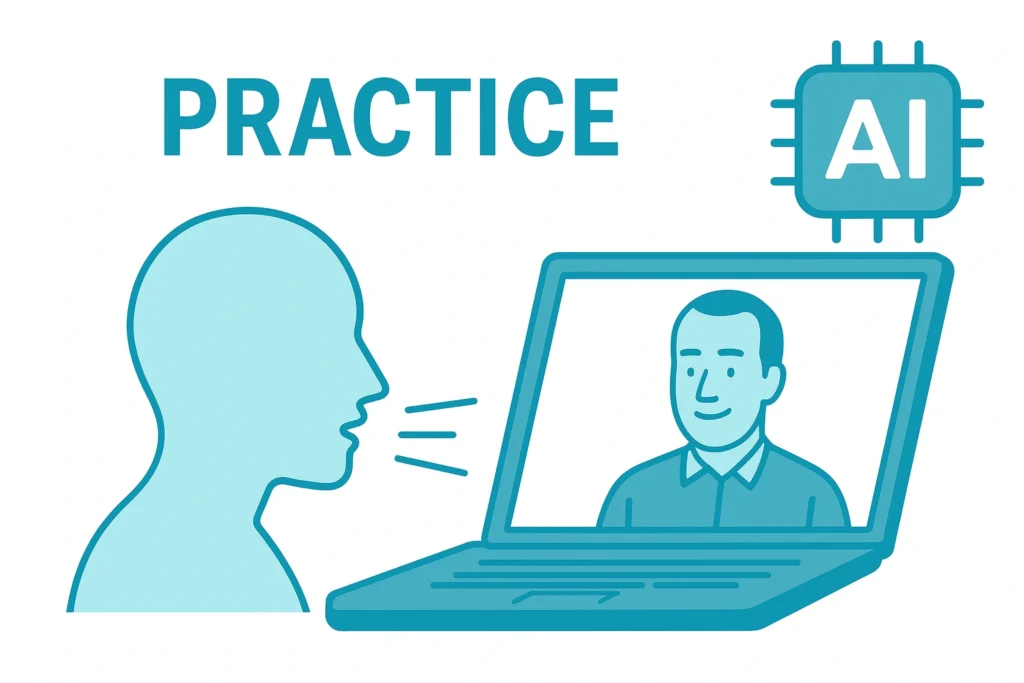
This is where the power of PractAIce lies. The platform enables you to train soft skills in situations relevant to your role and organisation. You can easily build realistic scenarios, from customer conversations to internal collaborations to leadership situations. The AI avatar reacts to your behaviour, giving you insight into:
• your tone•
your choices•
your structure•
your impact on the other person
And because you can practise as much as you like, real behavioural change takes place.
Conclusion: developing soft skills starts with realistic practice
Anyone wishing to develop soft skills must practise scenarios that closely resemble the situations they encounter in their daily work. In the nuances. In the tension. In the interaction. AI finally makes this practice space accessible. It transforms soft skills training from something you understand into something you can do.
Would you like to discover what AI-supported practice can mean for soft skills training within your organisation? Book a free demo. We’ll show you how to build bespoke scenarios and how people grow visibly and measurably in their behaviour.