



10 customer service skills to succeed in any job

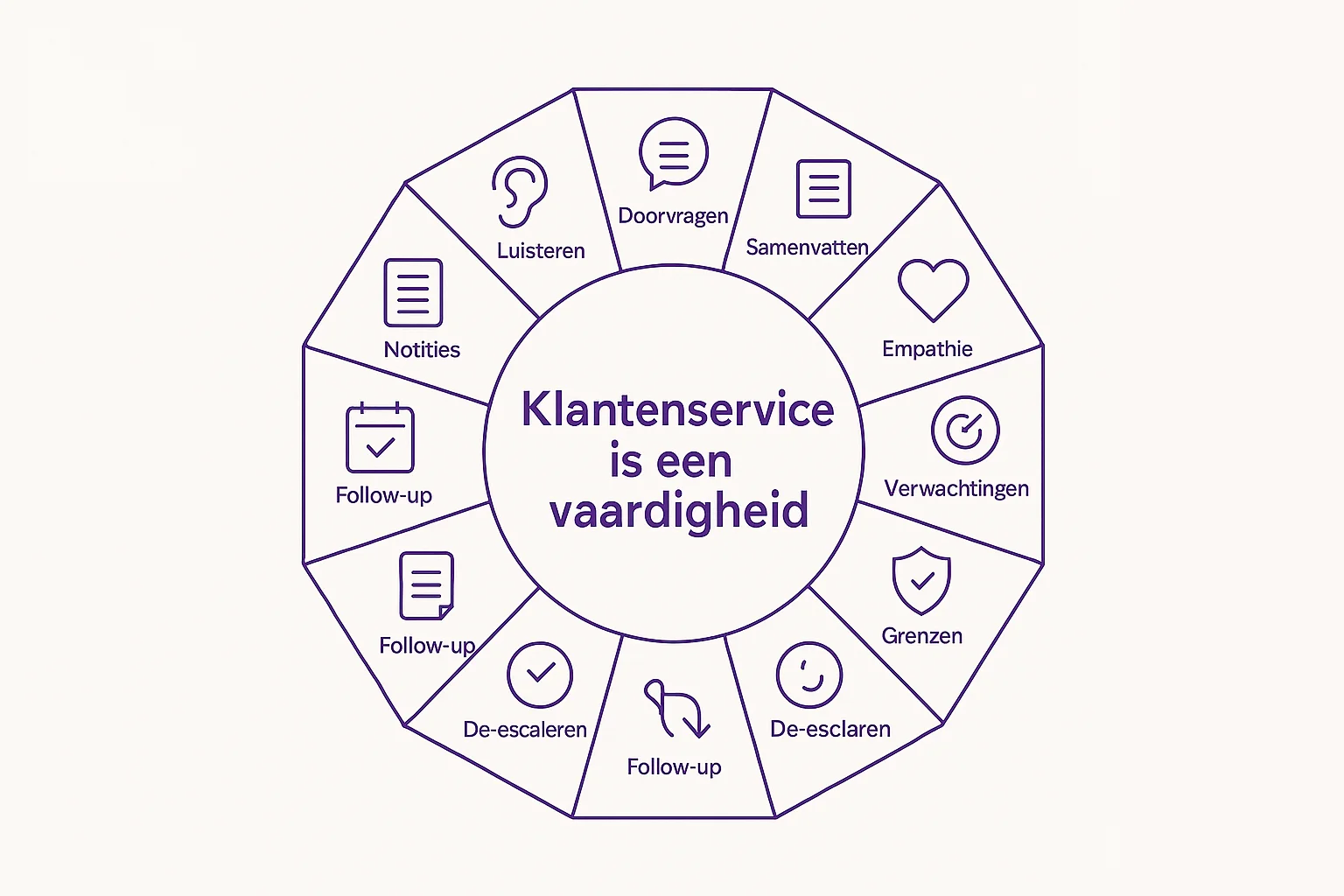
Good customer service isn’t a job title. It’s a skill. And once you’ve mastered it, you’ll benefit from it in any role.
At PractAIce, we train people to have better conversations. Not with scripted scenarios or practice sessions that feel unrealistic, but with realistic role-plays where you see yourself reflected. And what do we see time and time again? Successful people master a number of fundamental skills that go beyond simply ‘staying friendly’.
In this blog, I’m sharing 10 of those skills. Not just to tick off a list, but to get you thinking: where do you stand? What are you already doing well? And where can you still grow?
1. Listening without waiting for your turn to speak
Many people think they listen well, but are actually mostly preoccupied with what they want to say themselves. Genuine attention comes through in your voice. In your timing. In the questions you ask. And you can feel that attention. So can clients.
2. Empathising without getting caught up in the emotion
Empathy doesn’t mean you have to take everything on or solve everything. It means: acknowledging what’s there. Taking what someone says seriously. Even if you can’t fix it straight away. That often takes half the tension out of the situation.

3. Be clear without being blunt
You don’t have to beat around the bush on every tricky point. Clients appreciate clarity, as long as it’s respectful. How you say something is often more important than what you say.
In our soft skills training, for example, people practise setting boundaries without coming across as aloof. It’s a skill in its own right, but one that can be learned.
4. Be patient when you’re in a hurry
It is precisely when your diary is full or the pressure mounts that you want to switch gears quickly. But customers sense that. If you’re just going through the motions, the interaction becomes distant and flat. Sometimes, slowing down is actually the quickest route to a good conversation and a satisfied customer.
5. Dealing with unreasonableness without becoming unreasonable yourself
Sometimes you’ll be dealing with someone who takes their frustration out on you. Not because you’ve done anything wrong, but simply because you happen to be the one who answered the phone. Can you stay calm in that situation? Avoid taking it personally and handle it with care? That way, you’ll prevent things from escalating and remain professional.
6. Stay flexible, even if you already know the answer
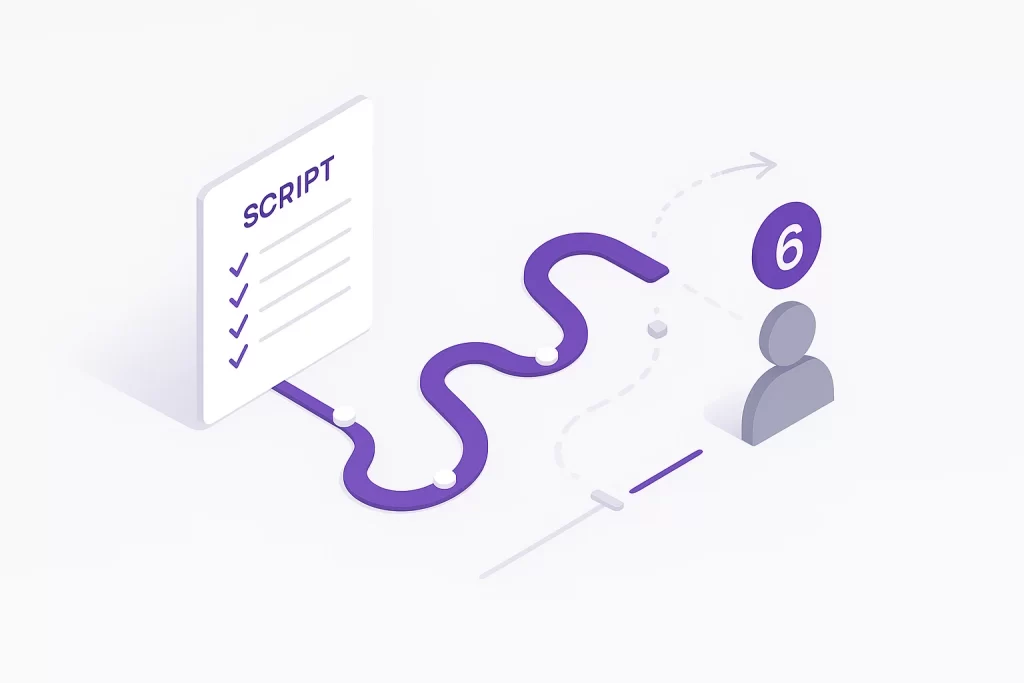
Every customer deserves an approach that suits them. Scripts help, but they don’t always reflect reality. The trick is to leave room for nuance. Even if you think you already know what the outcome will be.
You often see this in our competency-based training: people know what needs to be done, but are looking for ways to conduct the conversation professionally and effectively when things get tense, resistance arises or the customer expects something different from what was planned.
7. Dare to summarise, even if you think it’s unnecessary
A lot of frustration arises not because you’re doing nothing, but because people don’t realise you’re working on it. By summarising from time to time (“So, if I understand correctly…”) and actively involving the client, you provide reassurance. And because you come across as knowledgeable, you dispel doubts before they build up.
8. Use your voice and tone as a tool
Words are only part of what you communicate. Your tone, pace and intonation say just as much. In a face-to-face conversation, you have facial expressions and body language. In a phone call, you only have your voice. So it has to be right.
9. Receiving criticism without getting defensive
Not everything you hear is pleasant. Sometimes you receive feedback that doesn’t feel fair. Or that hits hard. But it is precisely this feedback that often contains valuable information you can use. Especially if you don’t immediately put up a defence.
10. Self-reflection
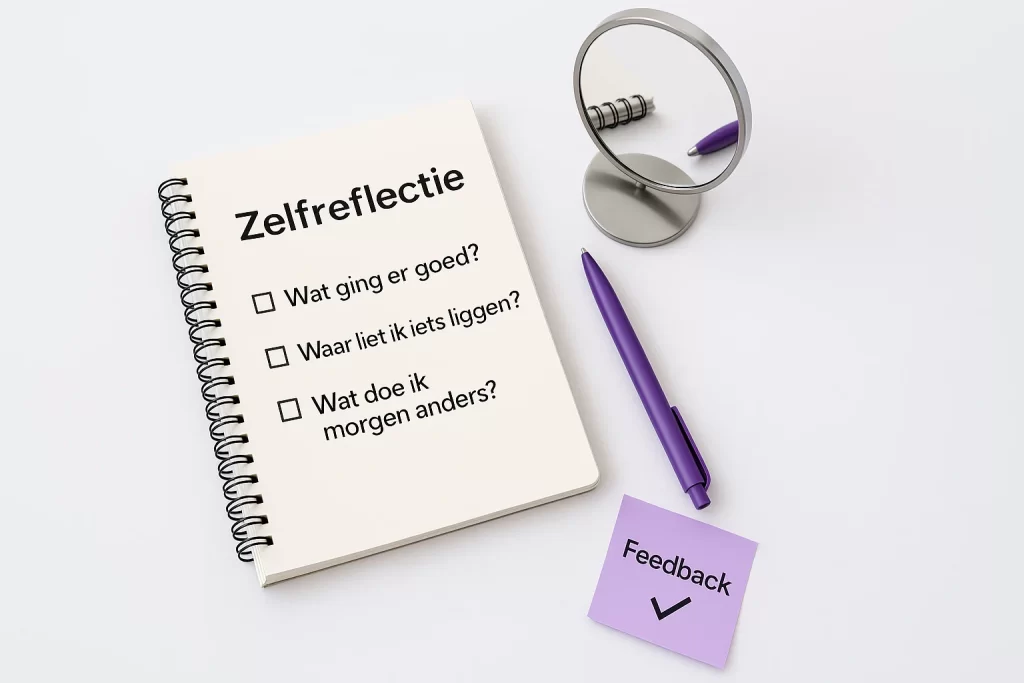
Perhaps the most important skill of all. Daring to look at yourself. Not out of guilt or shame, but out of curiosity. What went well? Where did you fall short? What would you do differently tomorrow?
At PractAIce, we believe you only grow if you dare to make mistakes. In a safe environment. At your own pace. With space to look back and improve. That’s why we build our training programmes around realistic scenarios and immediate feedback. No acting. No gimmicks. Just honest and rock-solid practice.
Want to find out where you stand on these skills? Book a demo and experience it for yourself.
Frequently asked questions about customer service skills
Are these skills only for customer service staff?
Certainly not. Anyone who works with people benefits from good customer-focused communication.
Can I practise this even if I don’t have much time?
Yes. That’s exactly when AI training is ideal. You can practise whenever it suits you, in short sessions of 5 to 10 minutes.
What if I’ve been working in customer service for years?
There’s still room for growth. Especially when it comes to refining your skills. We often see that experienced staff regain their edge when they practise new scenarios.
Is this also suitable for teams?
Absolutely. Teams can practise, analyse and develop via the platform, each at their own pace, but in line with the organisation’s goals.
Is this GDPR-compliant?
Yes. Everything you practise remains yours. Visible only to you. No recordings are shared. We train securely and confidentially.
Ready to make a difference?
Good customer service isn’t about being perfect. It’s about being mindful. About learning to listen, respond, adapt and ask follow-up questions better. And anyone can learn that, as long as you dare to practise. Would you like to see how that works in practice? Get in touch with us or book a demo and discover what’s possible for you (or your team).