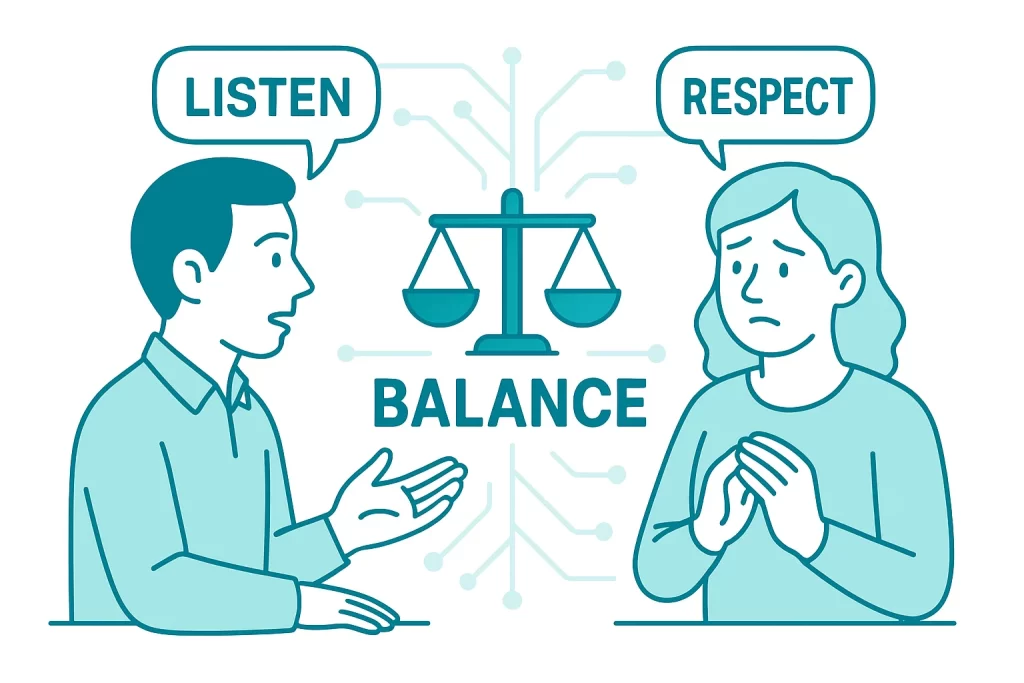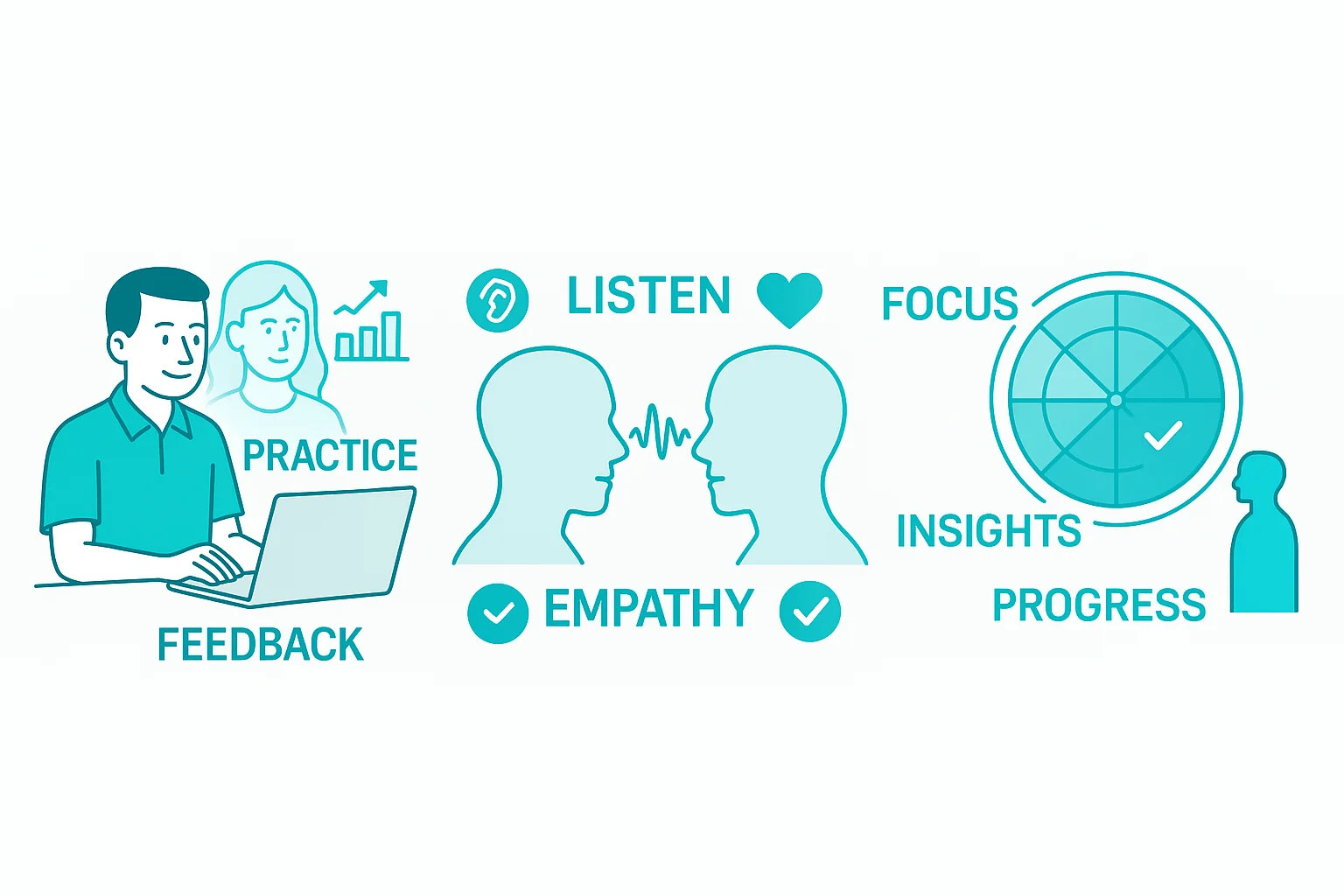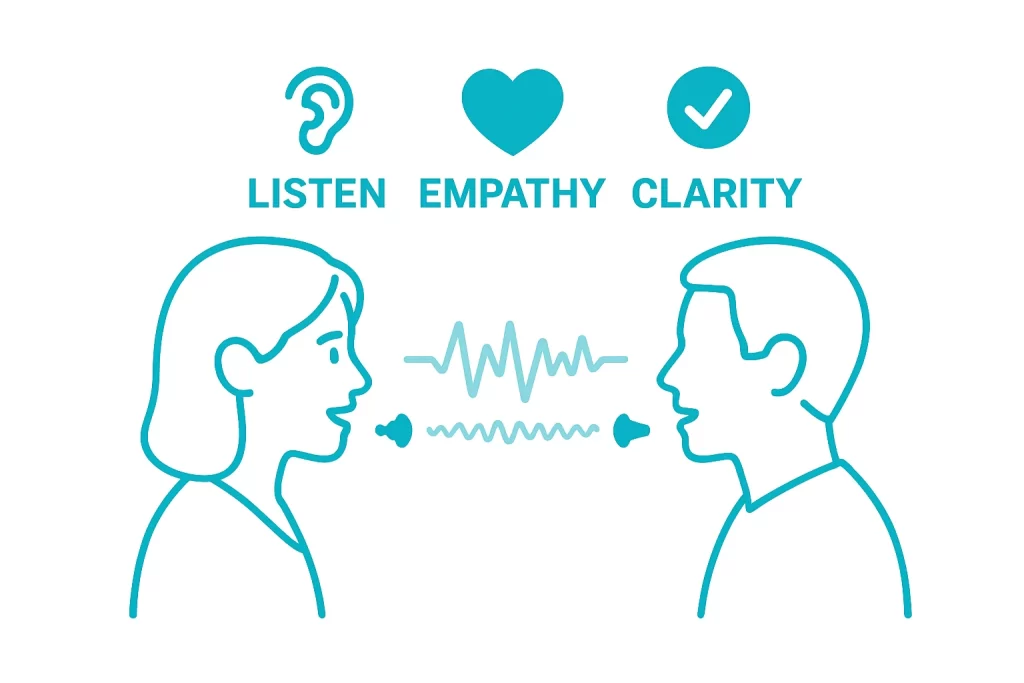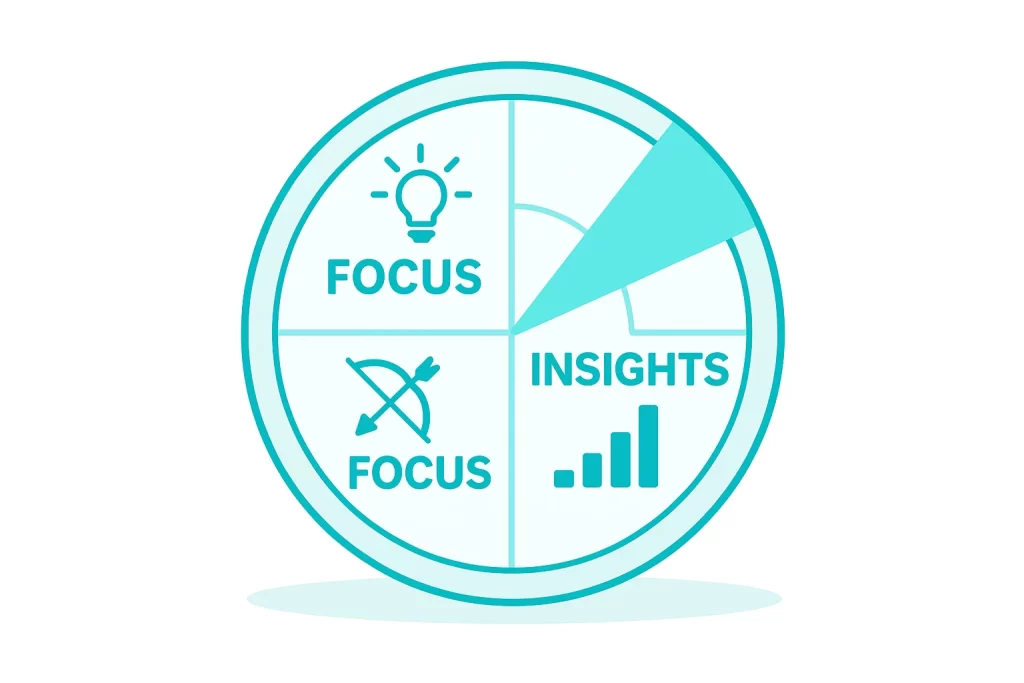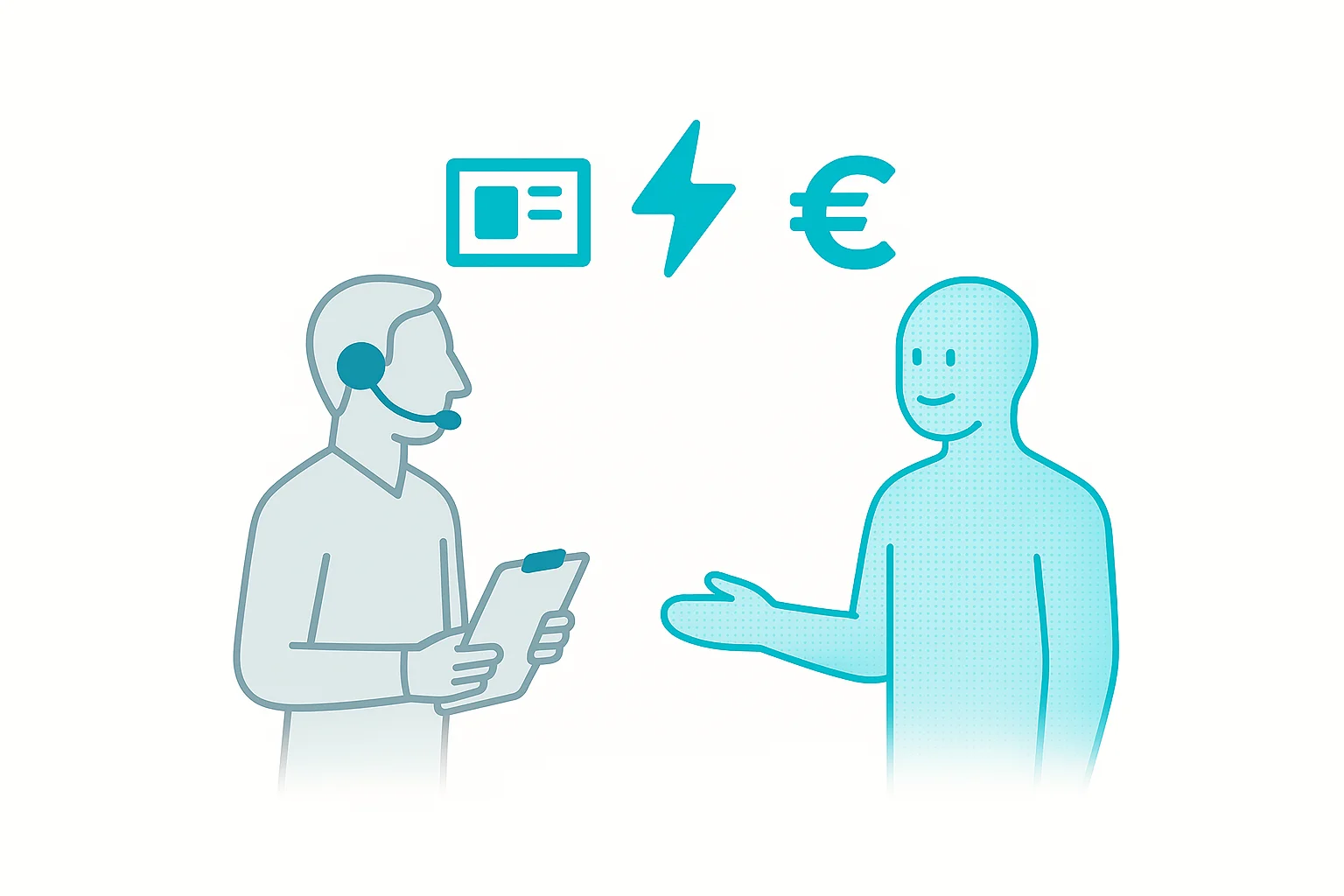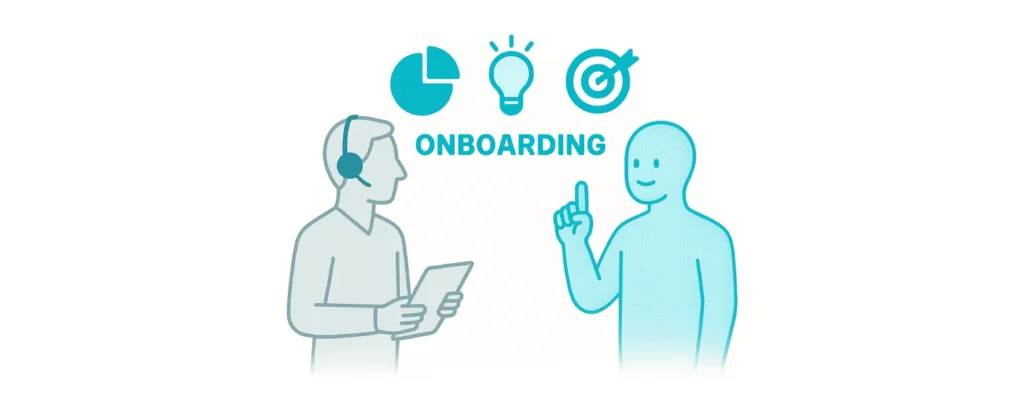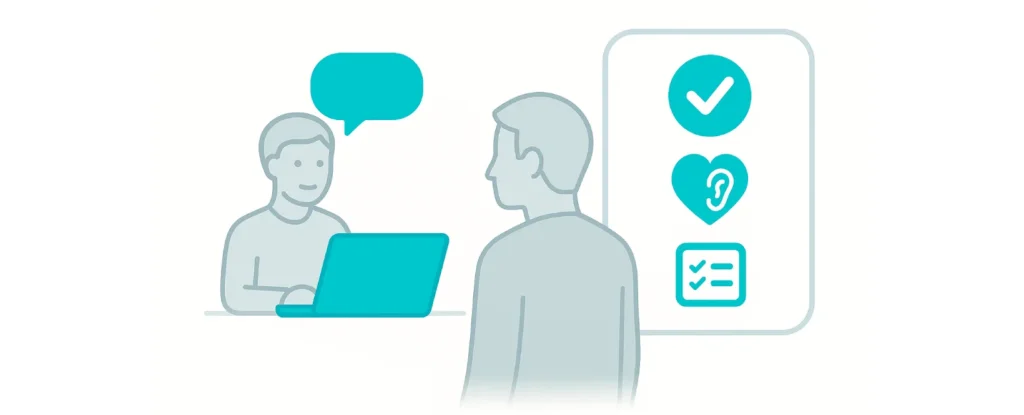
Developing soft skills in the age of AI: from examples to real growth

Soft skills are the invisible driving force behind effective collaboration, sales and strong leadership. Yet they are often overlooked compared to technical expertise. It is precisely these skills, however, that determine how someone communicates, deals with change and exerts influence within a team.

What exactly are soft skills?

Soft skills are personal skills that influence how you work with others and handle situations. Think of empathy, assertiveness, communication, collaboration, resilience and adaptability. They make the difference between someone who simply carries out tasks and someone who makes a real impact.

If you want to better understand which soft skills are currently in highest demand, take a look at this article by Michael Page. It highlights communication, critical thinking and emotional intelligence, amongst others, as key skills for the future.

Why soft skills are more important than ever

The workplace is changing faster than ever: technological developments, rapidly changing environments and the rise of AI demand people who can adapt and continue to communicate effectively. Soft skills are no longer a ‘nice to have’, but an absolute prerequisite for success. They determine how well teams work together, how quickly employees learn and how organisations respond to change.

Yet developing soft skills is not easy. You can read a book on giving feedback, but that doesn’t mean you can apply it effectively in practice. Or take a course on leadership, but it’s only in a real conversation that you realise whether your behaviour works.

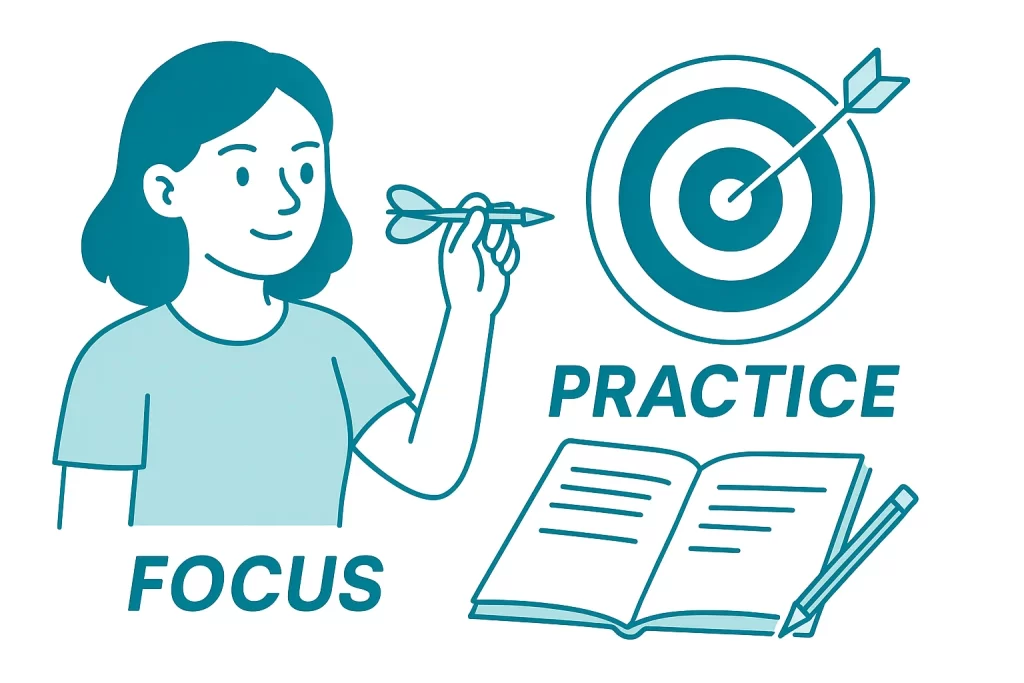
Practising rather than just learning

Real development only happens when people can practise with situations that resemble their daily work. That is where PractAIce makes the difference. The platform allows users to have realistic conversations with AI avatars that listen, respond and challenge. This enables professionals to practise their soft skills in a safe environment.

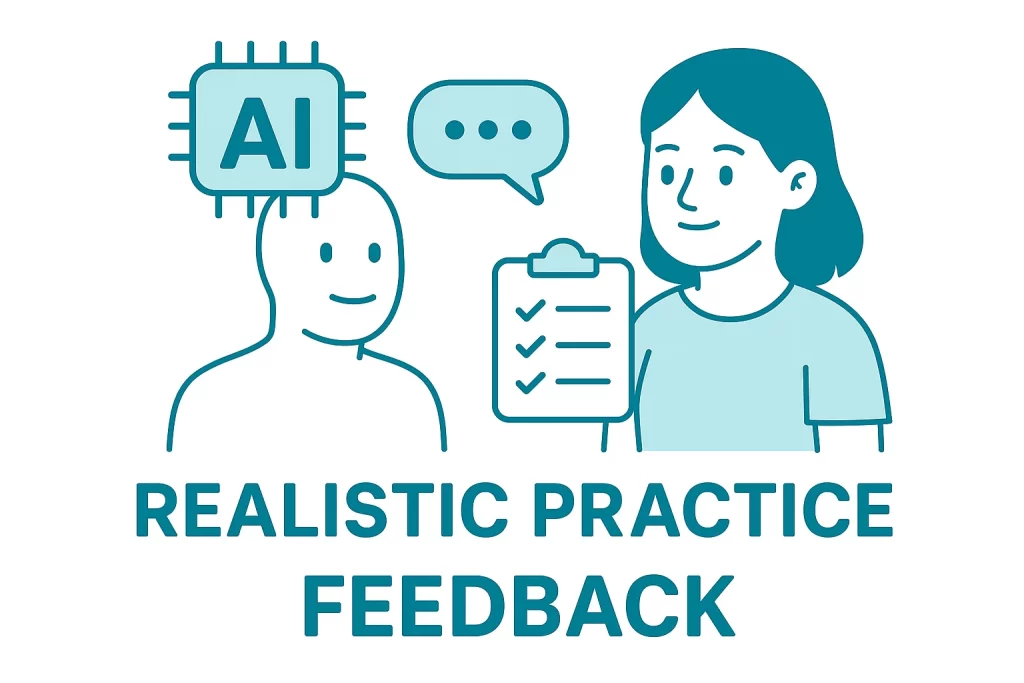
Instead of just talking about feedback or conflict management, you actually do it by practising. You choose your own scenario, set personal learning goals and receive immediate feedback with concrete examples and areas for improvement. This makes soft skills tangible and applicable.

The power of AI in personal development

AI enables personalised practice. PractAIce uses insights from behavioural science to provide feedback that matches your learning style and goals. You can practise, reflect and grow step by step, with no limits. Every exercise feels unique, because the avatar adapts to your behaviour.

Want to know more about why these skills are crucial? Then read Michael Page’s article on the five most in-demand soft skills and discover how organisations worldwide are investing in them.

De kracht van AI in persoonlijke ontwikkeling

Examples of soft skills to develop

A number of skills are indispensable in virtually every organisation. Communication teaches you to listen, summarise and ask probing questions. Leadership is about providing direction and building trust. Emotional intelligence helps you recognise signals and respond with empathy. Collaboration requires dealing effectively with different personalities. Adaptability means staying calm and making conscious choices in times of change. 

With PractAIce, you can practise each of these soft skills at your own pace, using scenarios tailored to your working environment.

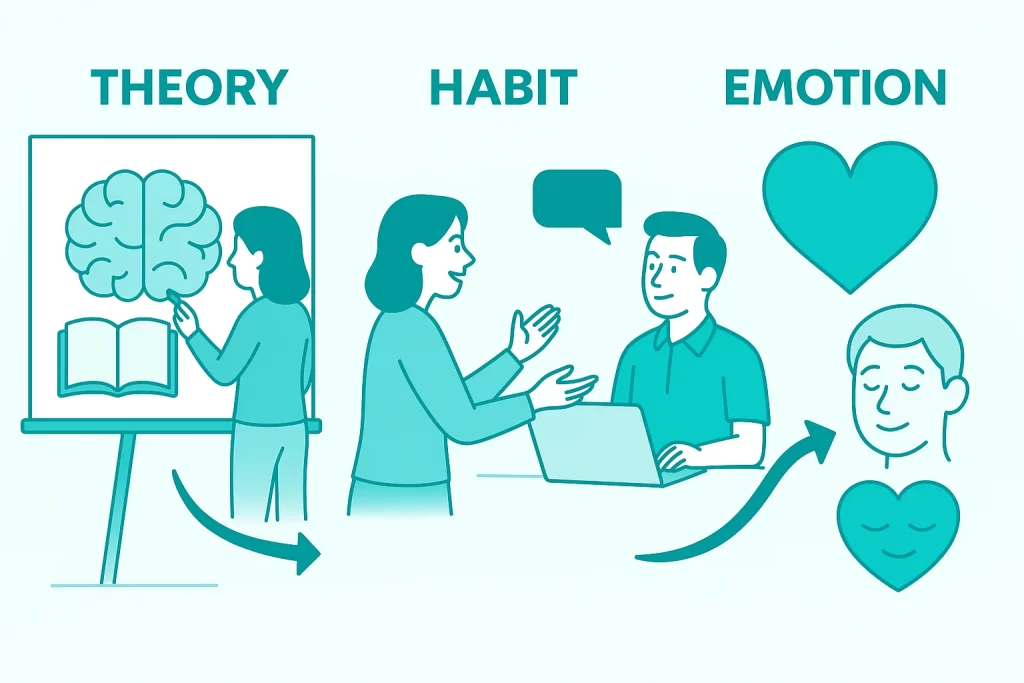
From knowledge to behaviour

Soft skills are behaviours that make a difference in practice. They determine how you react in a difficult conversation, how you deal with tension, or how you build trust within a team. That is precisely why practice works better than theory alone. With AI role-plays in PractAIce, you can improve that behaviour, receive feedback, and improve step by step in situations that are truly relevant to your work.

In conclusion

Soft skills are increasingly the difference between performing well and truly excelling. With platforms such as PractAIce, employees can practise tomorrow’s skills today. This makes learning more personalised, more effective and, above all, more practical. Would you like to know how this works in your organisation?
See how AI avatars train soft skills at www.practaice.nl.
Continuous skills development: how AI role-playing games help you grow in a meaningful way

In a world where roles, knowledge and expectations are changing at breakneck speed, competencies are more important than ever. Organisations invest heavily in training, but the real challenge lies not in the learning itself, but in continuing to apply what has been learnt. Skills only translate into behaviour when people are able to practise, reflect and adapt their approach and behaviour to different situations.

What exactly are competencies?

Competencies are the interplay of knowledge, skills and behaviour required to function effectively. Think of communication, customer focus, leadership or problem-solving ability. It is precisely these qualities that often make the difference between performing well and performing excellently. But how do you practise such things? A PowerPoint presentation or classroom-based training helps, but rarely changes behaviour.

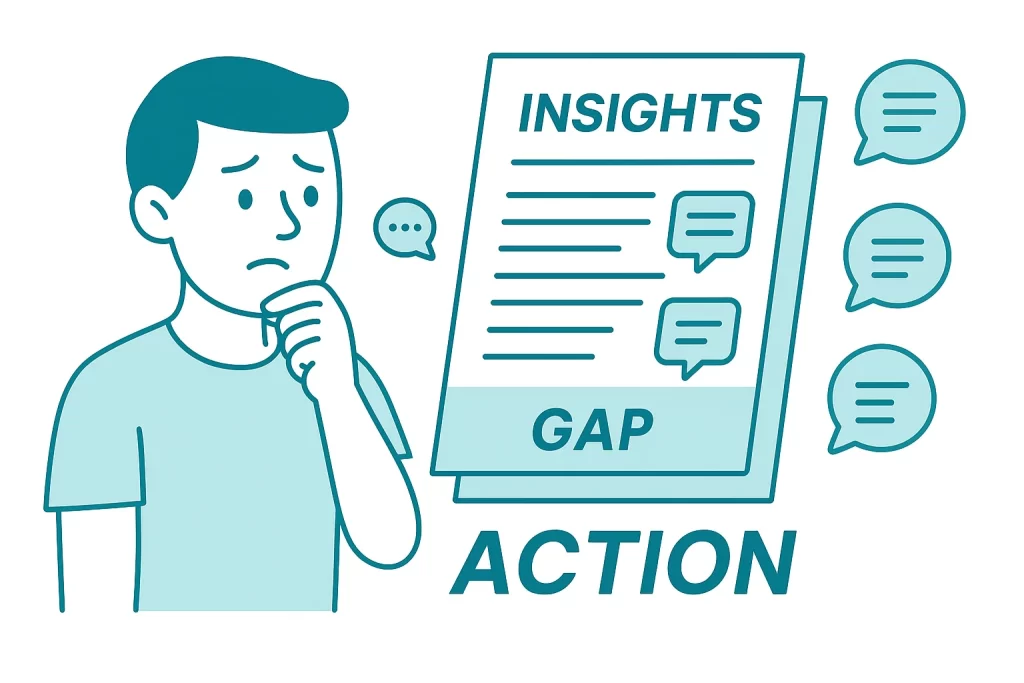
The gap between learning and doing

Many employees know what they need to do, but not how to apply it in practice. The context is missing, as is the opportunity to practise. And if you cannot practise, there is a good chance that new behaviour will never really stick. That is precisely why more and more organisations are looking for ways to develop competencies continuously, rather than teaching them as a one-off.

Practising with AI: every skill, every scenario

With PractAIce, professionals can practise realistic conversations with AI avatars. The strength lies in the ability to tailor the experience. You can select the skill you want to strengthen, create your own scenario and enter your personal learning objectives. This allows you to practise exactly what is relevant to your work, whether it’s a feedback session, a negotiation or dealing with a difficult customer.

The AI avatars react just like people: they mirror behaviour, challenge you and provide immediate feedback with concrete examples from the conversation. This makes practising not only safe, but also surprisingly educational.

Oefenen met AI_ elke competentie, elk scenario

Why this works

AI role-plays bridge the gap between theory and practice. Employees can practise, reflect and improve at their own pace, with no limits. The platform adapts to the learner’s behaviour as well as their learning objectives, making every exercise unique. And because it is fully digital, it is also scalable and accessible to teams across the entire organisation.

Practical examples

  • Communication and feedback: practise conducting a performance review whilst remaining open, honest and empathetic.
  • Leadership skills: learn how to motivate a demotivated team member by applying situational leadership.
  • Commercial skills: test how you respond to resistance or customer queries.
  • Conflict management: practise how to address tension without damaging the relationship.

Each session ends with clear, personalised feedback and feedforward. This way, you’ll not only see what you said, but also how it came across and what you can improve.

Frequently asked questions about competencies and AI

What are core competencies?
Core competencies are the key skills and behaviours someone needs to be successful in a role or organisation. Examples include collaboration, communication and customer-focused behaviour.

How can you practise competencies?
You develop competencies through repeated practice in realistic situations, with scope for feedback and reflection. With PractAIce, this can be done digitally, securely and in a tailored way.

How does AI help develop soft skills?
AI makes it possible to simulate conversations with avatars that respond naturally and provide personalised feedback. This makes practising soft skills realistic and allows everyone to grow at their own pace.

Continuous development in small steps

Competence development doesn’t have to be a big or time-consuming undertaking. By practising regularly, reflecting and making small improvements, a person grows systematically in behaviour and skills. That is exactly what PractAIce is designed for: a safe, smart environment where learning and doing come together.

In conclusion

Competencies form the basis of professional success. But knowledge alone is not enough. It’s about behaving in a way that suits the situation. With PractAIce, employees can strengthen their competencies at any time through realistic AI role-plays that align with their personal goals and work environment. Curious?
Discover how AI avatars help your team grow and book a demo: www.practaice.nl

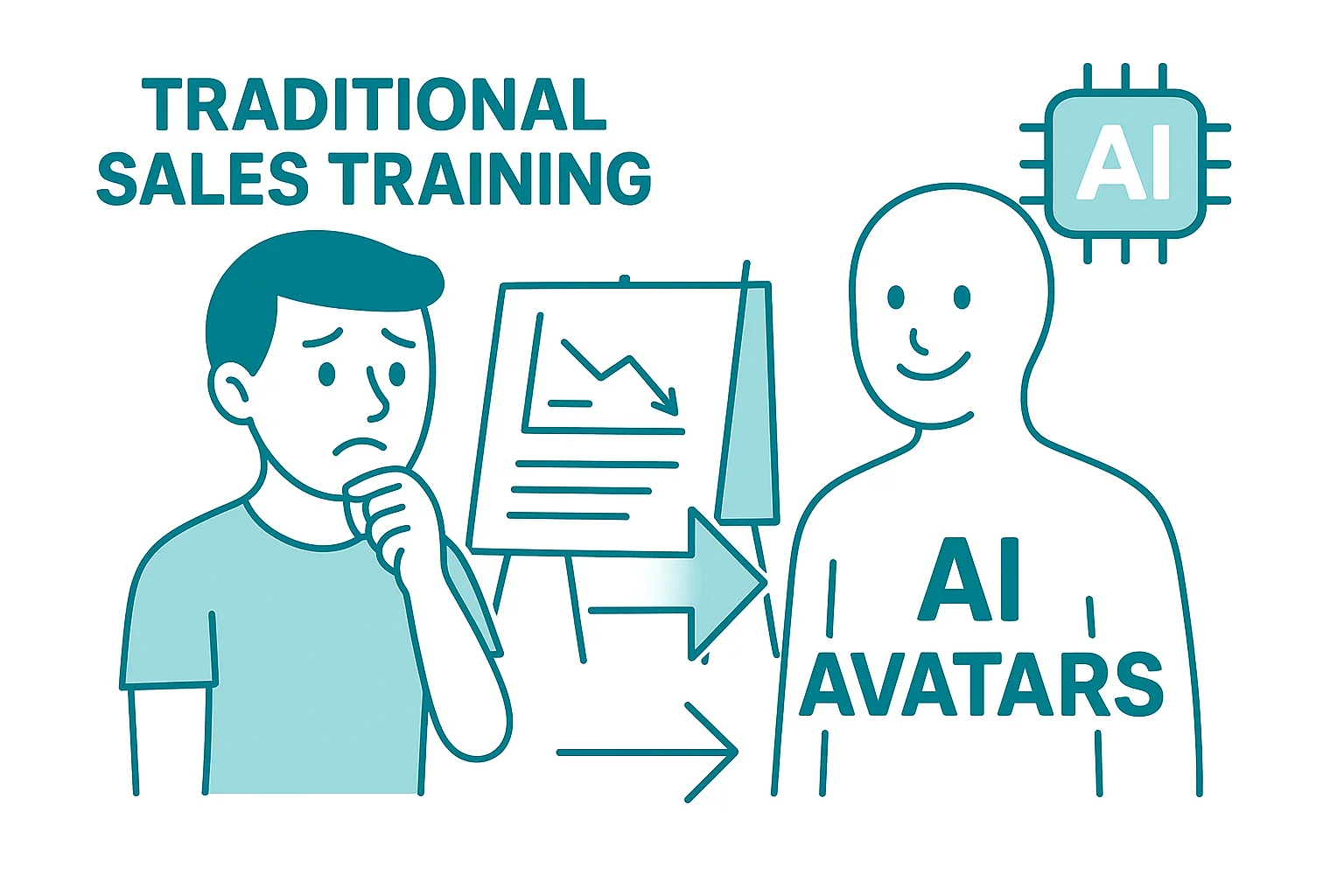
Why traditional sales training isn’t enough and how AI avatars make a difference

Most sales training programmes are inspiring on the day itself, but the effect wears off within weeks. Sales training is often a snapshot in time: salespeople practise for a short while, but without ongoing, realistic practice with immediate feedback, what they’ve learnt is quickly forgotten. It is only through regular practice that new behaviour becomes truly ingrained.

But how do you ensure that the new behaviour remains visible in practice even after the training? And how do you help employees retain those skills when the issues of the day take precedence again?

Recent research by Alghizzawi et al. (2025, International Review of Management and Marketing) shows that AI training leads to more personalised learning, continuous feedback and realistic practice simulations, which significantly increases the effectiveness of sales training.

These same principles form the core of PractAIce, where employees practise realistic conversations with AI avatars and receive immediate feedback, whenever they wish to train.

Why traditional sales training often fails to stick

  • Too much theory, too little practice. Many sales training courses remain theoretical, without participants gaining any real conversation experience. Without repeated practice using recognisable scenarios, new behaviour is not embedded in the workplace.
  • Role-playing is costly and has limited applicability. It requires trainers, actors, planning and space. As a result, teams practise too little. Moreover, participants do not always feel at ease; the ‘spotlight effect’ makes it difficult to display your behaviour as you would in a natural setting.
  • Feedback often remains superficial or too context-specific. A tip you receive today may not apply to another customer tomorrow, as every customer and every scenario is different.
  • Little customisation. Everyone goes through the same training, whilst strengths and areas for development differ for each salesperson.

In short: knowing what to do doesn’t change much, but it is only through repeated practice that new behaviour is formed that lasts.

Waarom traditionele sales training vaak niet blijft hangen

What salespeople actually need to improve significantly

  1. Realistic practice at the right moment. Not just once a quarter, but as soon as you hit a snag with an objection or another form of resistance. 
  2. Immediate, specific feedback on behaviour. What did you say? How did it sound? What was the effect? What would be a better way to phrase it?
  3. Personalisation for each salesperson and each scenario. Practising your areas for development (e.g. probing, summarising, recognising customer signals, closing).
  4. A safe environment where you can practise every scenario. Learn without judgement, repeat mistakes and improve until it feels natural.

How AI avatars enhance sales training

Recent research by Alghizzawi et al. (2025) shows that AI-driven training strategies significantly improve the performance of sales professionals. This is because AI systems enable personalised learning pathways, immediate feedback and realistic role-plays.

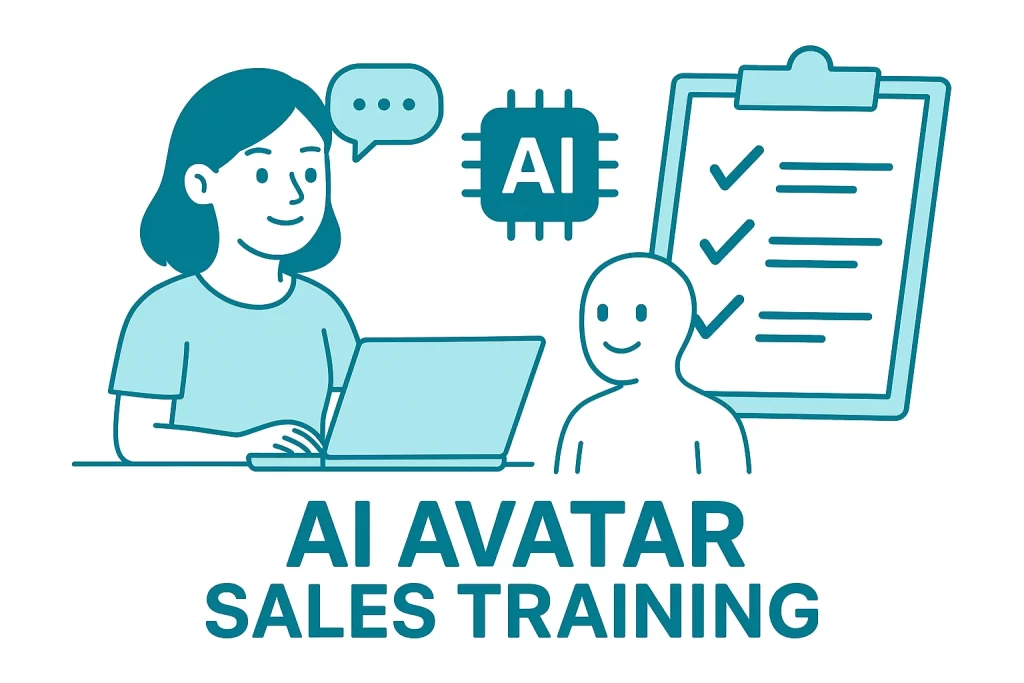
And this is precisely where PractAIce comes into the picture with AI Avatar training. Compared to traditional sales training, PractAIce goes further: employees practise real conversations with AI avatars that react like customers. This creates space to experiment, make mistakes and improve immediately. Whenever you want and as often as you like.  

In concrete terms, this means at PractAIce:

  • Unlimited practice of every sales conversation. From cold calling to demos, from negotiating the price to closing the deal.
  • Immediate, actionable feedback. The AI analyses your conversation (structure, recognition of customer signals, persuasiveness) and provides specific tips.
  • Tailored scenarios. The AI adapts the complexity and style to your level.
  • Scalable and consistent. Every team member receives the same quality of training, without being dependent on schedules or available actors.
  • Effective behavioural change. Because you practise more frequently and for shorter periods, newly learnt behaviour becomes a habit. 

In short, with AI avatars, you practise conversations that really suit you. You learn the tricks of the sales trade step by step, in situations that are recognisable and directly applicable to your daily work.

Examples: what specifically improves?

1) Handling objections

  • Situation: you hear “I’d like to think about it”.
  • Exercise with AI avatar: you practise three different follow-up questions.
  • Feedback: “You don’t repeat the question or restate the value. Try: ‘May I check exactly what you’re unsure about?
  • Effect: you create an opening for a concrete next step.

2) Identifying the underlying question with a prospect

  • Situation: a conversation with a prospect who describes a vague or superficial problem.
  • Exercise: learn to ask follow-up questions using open-ended questions, summarise and verify that you have a good understanding of the real need.
  • Feedback: “You’re asking two closed questions in a row. Try: ‘What would happen if this problem persists?’ and then summarise to check if you’ve got it right.”
  • Effect: a better understanding of the prospect’s actual needs and a clearer opening for a follow-up appointment or demo.

Closing without coming across as pushy

  • Situation: you’re having a good conversation with the prospect, but the deal is stalling. The signature isn’t forthcoming.
  • Exercise: practise different ways of closing, such as timing and silence, the next best action, or a small “yes” to build commitment.
  • Feedback: “You’re not specifying a clear next step. Try: ‘Shall I send the proposal in the meantime, and shall we schedule a quick meeting for Wednesday at 10:00 to go over any final questions?’
  • Effect: conversations flow more smoothly through the final stage, with a higher chance of securing the contract and getting it signed.

These improvements align with the findings of Alghizzawi et al. (2025), which show that AI-supported practice can accelerate decision-making and improve sales performance thanks to immediate, personalised feedback and continuous adaptation to the learning process.

How to improve your sales training in 4 steps

  1. Choose or create a common scenario. Start with the biggest sticking point or what you find difficult (e.g. objections such as “too expensive”).
  2. Define the learning objective for each role. This will give you feedback on your learning and development goals, along with tips.
  3. Practise in short cycles with AI avatars. 10–15 minutes a day: practise 3 variations, apply the feedback, try again. 
  4. Measurable progress. You’ll see clear progress at every stage of the sales process: more conversations lead to the next step, fewer appointments are cancelled, and you close more deals where certain objections arise.
Zo verbeter je jouw sales training in 4 stappen

FAQ on sales training with AI avatars

Does this work for experienced salespeople too?
Yes. The AI adapts to the user’s level and responds with greater nuance and depth. This gives you feedback on subtle differences in tone, timing and word choice – things you often don’t get feedback on in everyday conversations.

What about data security and bias?
Yes. PractAIce is fully GDPR-compliant and stores data exclusively within the EU. We actively monitor our AI models for bias, ensuring feedback remains fair and objective. 

Does this replace classroom training?
No, it enhances classroom training. After the theory, you can practise immediately in realistic situations with PractAIce. You receive targeted feedback, track your progress and refine your communication and sales skills step by step. Anytime, securely and at your own pace.

Summary for decision-makers

  • The problem: traditional sales training often fails to bring about lasting behavioural change.
  • The solution: AI avatars make practice realistic, personalised, repeatable and scalable.
  • The result: professionals have better conversations, make decisions faster and perform demonstrably better. 

Closing thoughts and next steps

Would you like to experience how an AI avatar reacts to your sales pitch or how you can handle objections more effectively? Practise one scenario and compare your approach before and after.
Book a short demo: www.pracataice.nl 

Practise realistic role-plays with an AI avatar. Train like a professional with AI avatars that mirror, challenge and improve your conversations and behaviour.

Team PractAIce

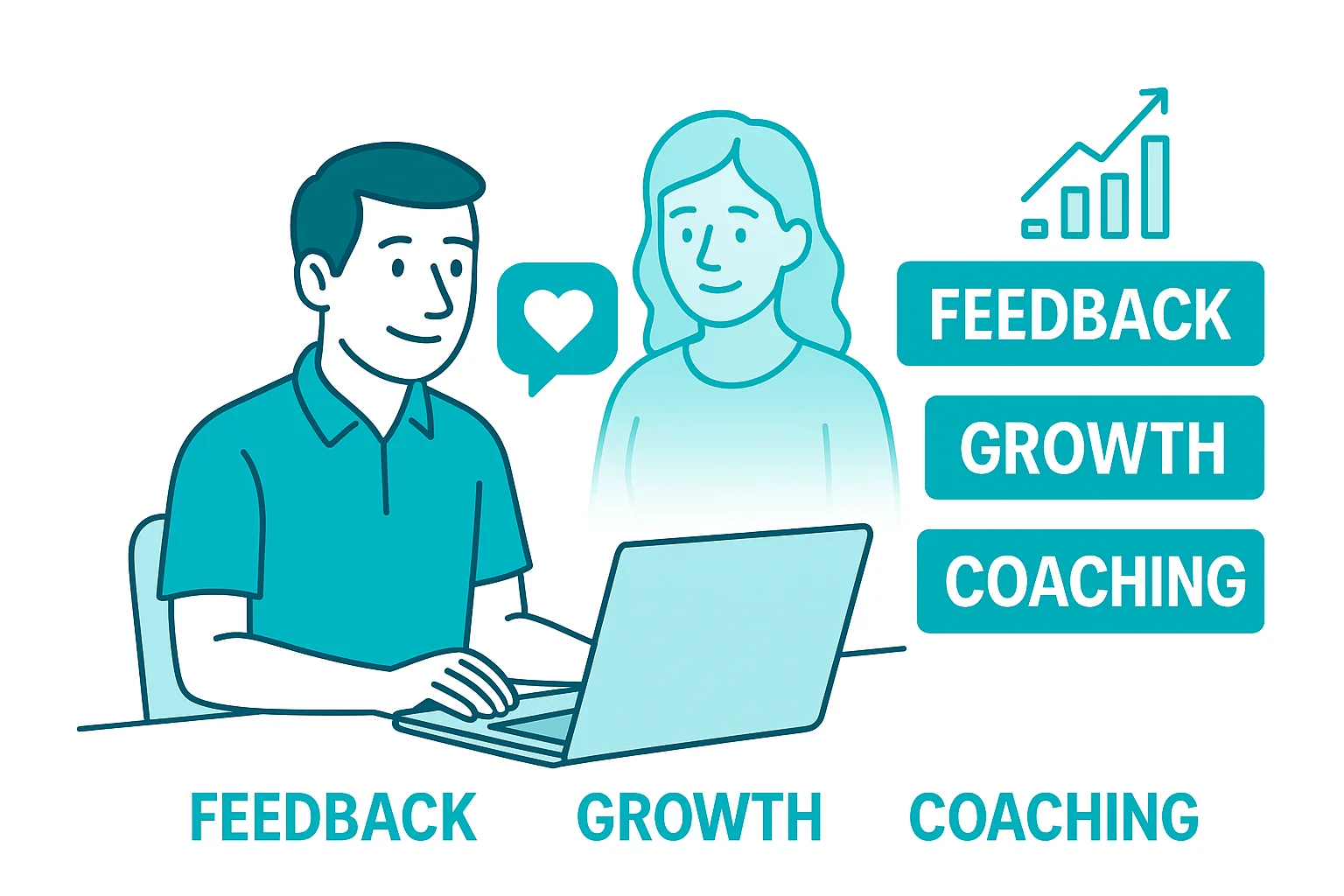
Why feedback only works when you have an AI coach

The phrase “why giving feedback is important”is searched for thousands of times every month.
We know that feedback helps us grow. Yet many conversations remain superficial or defensive. And we’re often worse at it than we think. Why? Because simply knowing about feedback isn’t enough; you have to practise it and do it very often. 

Why giving feedback is important

Feedback is fuel for growth. Without feedback, you don’t know what works and what doesn’t.
Yet people avoid it, for fear of tension or misunderstandings.
We do learn what good feedback is, but not how it feels to give or receive it. We don’t do that enough. We prefer to avoid the uncomfortable. And it is precisely by giving and receiving feedback that you learn a lot about yourself and help others to grow. 

The gap between knowing and doing

You can learn countless models: the 4 G’s, the sandwich method, non-violent communication.
But the moment emotion comes into play, you forget those rules. The conversation doesn’t always follow a model. The reality is more stubborn. And that isn’t unwillingness, but a human reflex. Emotions simply take precedence over rational thinking. That is why the only way to improve is to do it more often. It must become a habit. Something that comes naturally. Practising with real reactions, in a safe learning environment. With an AI coach who engages with you in conversation, reflects your behaviour, challenges you and helps you improve.

De kloof tussen weten en doen

How an AI coach makes feedback tangible

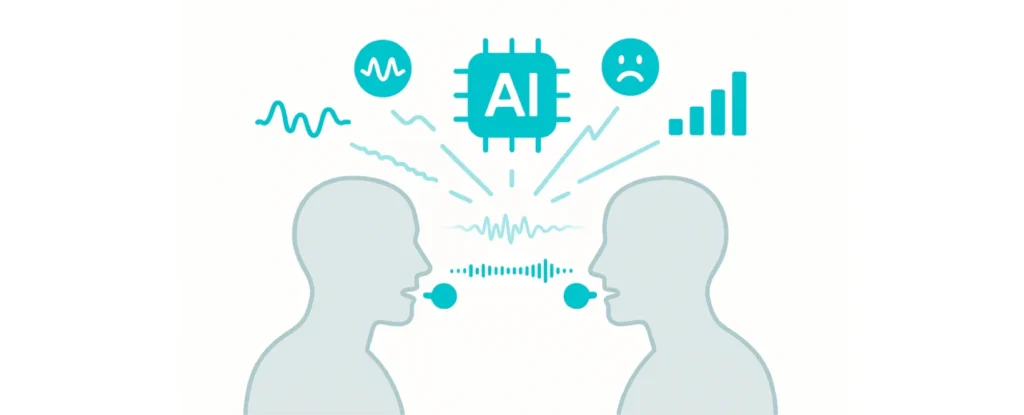
PractAIce’s AI coaches listen, respond and reflect. They recognise words, tone, pace and attitude.
Is your feedback too direct? Then you’ll see the avatar withdraw.
Are you using connecting language? The avatar opens up and the conversation becomes more constructive.

Afterwards, the AI coach analyses your conversation:

  • Which phrases triggered tension or understanding?
  • How often did you speak at the other person rather than with them?
  • Where did you lose empathy or focus?

You receive targeted and specific feedback so that you can apply it immediately in the next role-play.  

Why AI feedback works better than traditional evaluation

  • Real-time reflection: you see what you’re doing, not what someone tells you you’re doing.
  • Objective feedback: feedback that specifically reflects your behaviour and shows its effect on others.
  • Unlimited practice: every day, whenever it suits you.
  • Personalisation: tailored to your scenario, learning objectives and competencies.

This way, you not only develop your skills but also your self-awareness.

Waarom AI-feedback beter werkt dan klassieke evaluatie

Frequently asked questions about feedback and AI

Can AI really mimic human feedback?
Yes. The avatars in PractAIce use language models that recognise emotions and nuance.

Is feedback from AI reliable?
AI does not pass judgement, but observes behaviour objectively. It analyses patterns in language and responses with great accuracy. Moreover, AI never tires, is consistent in its observations and precise in providing concrete feedback.
Furthermore, its aim is not to judge, but to help you reflect and grow.

Who is this for?
Anyone who conducts conversations: HR, managers, coaches, consultants, teachers, staff.

In conclusion

Giving feedback is not a checklist, but a skill that develops with experience.
An AI coach makes practising accessible, concrete and safe, so that everyone learns to communicate better. Step by step, conversation by conversation.

Would you like to find out if this suits your organisation or team?
Feel free to request a demo via www.practaice.nl.

From 360-degree feedback to 360-degree practice

360-degree feedback is popular.
Many organisations see it as a valuable way for colleagues to get to know one another better, give each other feedback and grow together.
Employees, colleagues and managers complete each other’s forms, and HR carefully oversees the process.

Yet, little often changes after the report is issued.
The insights are there, but behaviour remains the same.
Feedback is discussed, but rarely acted upon.

More and more organisations are therefore asking the same question:
how do we make feedback truly educational?
How do we ensure that feedback is not just an annual exercise,
but a habit, something people do every day and take for granted?

What is 360-degree feedback?

With 360-degree feedback, you gather information about behaviour from different perspectives: colleagues, managers, and sometimes customers.
You get a broad picture of how someone comes across, but it often stops at observation.
In practice, little is done with those insights to actually improve. 

Why 360-degree feedback often falls flat

  • Feedback is too general: “could listen better” or “could be more direct” doesn’t help without context.
  • There is no follow-up: people do not know how to do things differently.
  • Feedback creates tension: without a safe environment to practise in, people don’t dare to experiment with new behaviour.

This is where the bridge lies: from evaluation to experience.

The next step: practising 360-degree feedback

With our AI role-plays, you can translate 360-degree feedback into realistic learning moments.
Suppose your feedback shows that you don’t listen enough.
In PractAIce, you practise conversations where that behaviour occurs.
The AI avatar reacts to your communication, interruptions or, conversely, silence.
Afterwards, you see how the conversation went. What went well, what could have been better and why.

This is how you link feedback to real behaviour.

De volgende stap_ 360-graden oefenen

The benefits for organisations

  • Continuous learning: feedback is not a snapshot but an ongoing learning process.
  • Measurable growth: PractAIce shows development per competency.
  • Safe practice: employees train without fear of judgement.
  • Cultural change: giving and receiving feedback becomes the new normal.

Frequently asked questions about 360-degree feedback

What is the purpose of 360-degree feedback?
To gain insight into behaviour from multiple perspectives.

What do you do with 360-degree feedback?
Use it to formulate learning objectives and practise behaviour.

How do you make 360-degree feedback effective?
By linking it to practical exercises, such as AI avatars in PractAIce.

In conclusion

Feedback without practice remains theory.
Organisations that combine 360-degree feedback with AI exercises see real behavioural change.
From measurement to learning. From report to result.

Would you like to discover how PractAIce enhances feedback in your organisation?
Feel free to request a demo via www.practaice.nl.

How do you give good feedback? Practise with an AI avatar

Giving feedback is something we all do, but few people do it properly. It’s quite tricky. If you’re too direct, the other person shuts down. If you’re too cautious, it dilutes the core message and doesn’t come across effectively.
It’s no surprise that people search for “how to give feedback”, “rules of feedback” and “effective feedback”thousands of times every month.
People want to know how to give feedback that doesn’t cause friction, but actually builds bridges. They want to help the other person, but not damage the relationship. 

Perhaps you recognise this: you want to raise an issue, but don’t know how.
Or you gave feedback and realised it came across differently than intended.
It sounds simple, yet it’s difficult in practice.

What does good feedback actually mean?

Good feedback helps someone move forward. It’s not about being right, but about growth.
Effective feedback is:

  • Specific (you describe concrete behaviour);
  • Timely (as soon as possible after the event);
  • A balance between positive and constructive;
  • Forward-looking (“what could you do differently next time?”).

Yet we all know that knowing the rules doesn’t mean you can apply them.
The real challenge lies in how you say it: the tone, the timing, the intention. And your non-verbal communication.

Why giving feedback often goes wrong

There’s a reason why “how to give feedback without conflict” is such a popular search term.
We quickly fall back on automatic behavioural patterns, such as immediately going on the defensive, making excuses or carefully downplaying things.
Giving feedback is nerve-wracking, for both the giver and the receiver.
You only get one chance to get it right, and you don’t want to damage the relationship.
That is precisely why practice is so important.
By practising, you learn to deal with your own pitfalls, recognise patterns in your reactions, and discover where you can grow.
You learn to manage emotion, tension, and the impact of your words. 

Practising feedback with AI avatars

Traditional training courses help, but are often theoretical or take place in small groups.
With our AI avatars, you can practise feedback situations realistically, whenever you want.
The avatar reacts in a human way – showing surprise, anger or openness, depending on your tone and words.
Afterwards, you can literally see:

  • What you said,
  • What the effect was,
  • And how it could have been better (including specific suggestions).

That’s how feedback becomes concrete. You see your own communication style reflected, without anyone feeling judged.

Who is this for?

HR managers, team leaders and professionals use PractAIce to learn how to give feedback more effectively.
They practise appraisal interviews, peer reviews and their collaboration.
Managers also train in giving feedback that is not directive, but coaching and supportive.
And all without any risks: AI avatars don’t take anything personally, but reflect your behaviour honestly and consistently.

Frequently asked questions about giving feedback

What are the 5 rules of feedback?
Specific, observable, timely, constructive and future-oriented.

How do you give feedback in a respectful way?
Use ‘I’ language (“I noticed that…”), focus on behaviour, not on the person.

How do you practise giving feedback?
Create your own scenario based on something you find difficult, or choose an existing one and practise it with an AI Avatar. Do the role-play, repeat, reflect and improve. 

In conclusion

Good feedback isn’t a talent, but a skill. And any skill can be practised.
With AI avatars, you can practise conversations you’d normally avoid.
That way, “how to give feedback” stops being a question you search for, and becomes a skill you’ve mastered.

Curious to see how this can help your team?
Feel free to request a demo via www.practaice.nl

How AI avatars accelerate personal development

Everyone wants to grow, but it’s difficult to really take control of your personal development.
You attend a training course, have a good conversation, and then work takes over again. And before you know it, the skills you’ve just learnt have faded into the background. But with an AI avatar, you can actually get a better handle on that growth.
By practising with avatars that react like humans in realistic role-plays, you work on behaviours that make a visible difference in communication, collaboration and results.
This way, you continuously develop yourself and see that reflected in your performance.

What is an AI avatar?

An AI avatar is a digital conversation partner that listens, responds and gives feedback as if you were talking to a real person.

During role-plays, you practise real-life conversations: from a difficult appraisal or sales meeting to a persuasive client presentation. In just a few steps, you can create your own scenario, with learning objectives and competencies relevant to you. This way, the avatar challenges you precisely on the behaviour you wish to develop further.

The AI avatar responds immediately to what you say, asks follow-up questions, and your AI coach provides targeted feedback afterwards on content, tone and conversation structure.
This way, you learn not only what you say, but above all how you say it and how that affects the other person.

Regular practice leads to lasting behavioural change.
You’ll grow in confidence, communication skills and effectiveness.
The AI avatar makes personal development tangible and continuous. What’s more, it’s always available, personalised and secure.

Why AI avatars are particularly valuable right now

  • A rapidly changing environment demands adaptability and continuous learning. AI avatars make this possible; they help people develop their soft skills through short, realistic role-plays.
  • Time is scarce. Short learning sessions with AI avatars fit perfectly into the work rhythm and make practice part of the working day.
  • Human skills make all the difference. Empathy, listening and clear communication are best practised through realistic role-plays that feel authentic.

AI avatars therefore bring learning and doing together, with short exercises, immediate feedback and visible progress in practice.

The benefits for teams and organisations

1. Realistic practice without risk
AI avatars simulate real-life situations. Employees feel confident to experiment, make mistakes and try again straight away. 

2. Personalised feedback on behaviour
After each role-play, you receive immediate feedback on what you said, how you said it and how you structured your conversation. At the end, you are given examples of phrases or wording that would have worked better. This makes learning concrete, personalised and motivating. 

3. Scalable and consistent
One platform, countless scenarios. AI avatars make personal development scalable. You can also easily build your own scenarios, tailored to specific learning objectives or situations from your own practice.

4. Measurable results
Progress is tracked per learning objective and per team. This allows you to see which skills are improving and where extra guidance is needed.

5. Safe learning environment
Practising with an AI avatar feels safe. There is no judgement, only reflection and growth. This lowers barriers and accelerates development.

Misconceptions about AI avatars

“AI is impersonal.”
On the contrary: our AI avatars react in a very human way. They use natural language and intonation that make the conversation feel lifelike.

“Role-playing only works with an actor.”
AI role-playing can always be tailored to your needs, so you can practise in a safe environment that matches your work practice. You choose when and how often you train, at a time that suits you. This way, learning is no longer a one-off training session, but a regular part of your work routine.

“We already have e-learning.”
E-learning imparts knowledge. AI avatars train specific behaviours. By doing, not by reading.

How to use AI avatars for personal development

Step 1: Choose one or more specific learning objectives
For example, listening more effectively, giving clearer feedback or dealing with resistance.

Step 2: Practise in familiar situations
Use scenarios that resemble your daily practice. The more familiar, the more effective.

Step 3: Plan short, regular sessions
Five to ten minutes of practice per week is often enough to learn and embed new behaviour.

Step 4: Reflect on your conversations
What worked? And why did it work? What did you do differently? The AI avatar helps you recognise patterns and highlights different perspectives, enabling you to make effective adjustments.

Step 5: Measure your progress
Review scores and feedback for each competency over time. This makes progress visible and motivates you to keep practising.

Measurable effects of AI avatars

AI avatars quickly demonstrate the benefits of practice. Employees communicate more calmly, clearly and with greater empathy. Teams collaborate more effectively because they understand each other more quickly and feel confident in addressing one another. Customers notice this too. Conversations flow more smoothly, people listen more attentively, and there is a better response to customer needs. This not only boosts satisfaction but also employees’ self-confidence. They feel better prepared for challenging situations and learn more quickly from their own experiences. In this way, development is no longer a one-off event, but a continuous process that runs through daily work. And that also translates into better business performance. 

Real-world examples

Customer service
In customer service, staff use AI avatars to practise realistic scenarios where customers become emotional. They learn how to show understanding, remain calm and turn that emotion into a positive one, resulting in a satisfied customer. By actively listening and summarising, they experience the positive effects this has on customers’ behaviour. 

Sales
In sales and advisory conversations, the AI avatar helps staff respond more effectively to resistance or objections related to price. Staff learn to emphasise value rather than justifying a discount. They also learn to ask probing questions and recognise underlying customer needs. They practise building trust quickly, for example by listening more effectively, summarising concisely and concluding clearly.

Leadership & HR
Managers and HR professionals use AI avatars to practise difficult conversations, such as performance reviews or absence management discussions. They learn to communicate clearly without damaging the relationship and gain insight into conversational effectiveness and communication skills. This increases empathy, decisiveness and effectiveness in practice.

Our AI avatars make it easy to practise all these situations in a safe environment. Realistic and effective.
It’s OK to make mistakes, you can always repeat the exercise, and every conversation immediately yields new insights that you can apply the very next day.

FAQ on AI avatars and personal development

1. How does an AI avatar encourage personal development?
Through immediate feedback and repetition. Each exercise highlights areas for improvement, leading to faster behavioural change.

2. Does this work for everyone?
Yes. Beginners learn basic skills, whilst experienced professionals refine their approach and leadership style.

3. How safe is the use of AI avatars?
Safe. 

4. Does this replace coaching or training?
No, it enhances them. AI avatars help you keep practising between sessions.

5. How do I measure the impact?
Use dashboards with progress scores for each learning objective. Combine this with practical feedback from clients or colleagues.

From practising to excelling

An AI avatar makes personal development continuous, practical and measurable.
Through realistic role-plays, you practise behaviours that have a direct impact on performance.
In this way, you develop yourself, strengthen your team and help the organisation grow alongside you.
That is learning that works, day in, day out.

AI avatar training in sales: practise smarter, sell more effectively

Every sales professional knows the feeling: that crucial conversation where every word counts. Yet it remains difficult to really practise for the moments that matter. Presentations, objections, price negotiations. Often, you only learn the hard way.

AI Avatar training in sales changes that. It makes practising super-realistic, personalised and, what’s more, always available.  

What is AI Avatar training in sales?

In AI Avatar training in sales, a salesperson practises conversations with a lifelike digital conversation partner. The avatar responds with speech, facial expressions and emotions. All driven by AI.

The training simulates realistic customer situations, from an initial introduction to negotiating price or a contract. The salesperson simply speaks as they normally would and then receives immediate AI feedback on how the conversation went. What went well, what could be improved, and how can you approach it more effectively next time?

The result: highly concrete and practical feedback, not boring e-learning or role-playing with colleagues, but a safe environment in which someone can practise without restriction. Without judgement, without embarrassment or tension. 

Wat is AI Avatar training in sales

Why sales organisations are embracing this

1. Practice becomes concrete and measurable

Whereas traditional sales training often stops at the workshop, AI Avatar training in sales goes further. Every role-play provides insights: how well did the salesperson listen? Was the response empathetic? Were the buying signals recognised?

That feedback makes learning and development visible, for both the participant and the manager.

2. Practise anytime, without being tied to a schedule

Salespeople practise wherever and whenever it suits them. The role-plays are short but powerful. That’s why they fit perfectly into busy schedules. This way, learning remains a constant, without taking up a whole day of training.

Great, isn’t it? It lowers the barrier to entry, as practising becomes part of the working day rather than something that requires extra time.

3. Personal development in practice

The AI coach provides concrete, actionable feedback. For example: “Instead of asking why the price is too high, say: ‘I understand that price is a factor. Shall I explain what value you get in return?’” With concrete guidance, learning becomes enjoyable because you achieve results quickly and develop your sales skills.

Common misconceptions

AI replaces human training

No, this is not true. AI Avatar training in sales is not a replacement, but it enriches traditional sales training with realistic practice sessions and continuous feedback. reinforcement. 

It’s impersonal

On the contrary. The AI Avatars respond in a highly realistic manner and adapt to your behaviour. And because you’re training in a safe environment, you’re allowed to make mistakes and can constantly reflect on what you can do more effectively next time. This way, you become a better salesperson through the growth you achieve in your sales skills.  

It’s too complex

The platform is very easy to use. You can easily create your own scenarios and select your learning objectives and competencies. The feedback is fully tailored and designed to be practical, so you can apply it directly in real-life situations. 

Veelvoorkomende misverstanden

How to use AI Avatar training within your team

  1. Start with realistic scenarios or create your own
    Think of specific customer types or situations that frequently arise, such as pricing, resistance, complaints or cross-selling opportunities.
  2. Link scenarios to specific learning objectives and competencies
    For example, listening, persuasion, showing empathy and negotiation techniques. This gives each exercise a clear focus.
  3. Progress is visible
    Use the dashboards to track team growth and gain insights into where opportunities for growth lie. Share insights, discuss them with each other, reflect and learn. 

FAQ about AI Avatar training in sales

What does AI Avatar training in sales cost?

This depends, among other things, on the number of users, company-specific requirements, and the number of licences and tokens.

How realistic is the avatar?

Very realistic. The avatars use the latest lip-sync technology, so it sounds like natural speech. The avatar reacts in a human way, with emotions and pauses.

Is data stored securely?

Yes. Conversations and feedback are processed in accordance with European privacy legislation. 

In conclusion: small steps, big impact

Not sure whether AI Avatar training in sales is right for your organisation? Start small. Let one team practise with it, measure the results, and then expand.

Would you like to see how it works in practice? Feel free to request a demo.

AI Avatar training in customer service: learning from every conversation

A kind word at the right moment can turn a customer into a loyal one. Yet that is precisely what often goes wrong in the hustle and bustle of a working day. A customer calling in a state of emotion, an angry email, or an unclear chat message does not call for standard replies, but for genuine attention.

AI Avatar training in customer service helps teams to listen better, respond more calmly and make a genuine connection with customers. Even when the workload is high.

What is AI Avatar training in customer service?

Instead of role-playing with colleagues or practising in your head, an employee practises with a digital persona – a customer. The AI avatar talks, listens and responds as if it were a real conversation. Complete with emotion, resistance or empathy. Entirely depending on how you respond.

Immediate AI feedback follows afterwards. How did you come across? Did you show empathy towards the customer and understand why they were angry? How clear was your explanation?

What makes this training unique is that it isn’t a one-off exercise. Staff can practise role-playing scenarios over and over again, in short, targeted sessions. This fosters a learning culture where feedback is second nature.

Wat is AI Avatar training in klantenservice

Why does AI Avatar training make a difference in customer service?

1. Learning becomes part of the working day

No training days that are quickly forgotten, but short, focused moments of learning. A quick practice session between two calls, or immediately re-enacting and practising the scenario after a difficult customer interaction. This way, you develop and learn quickly, in small steps, continuously and measurably.

2. More empathy, less stress

The AI coach provides practical tips that help, for example, to reduce tension and respond with empathy. This enables customer service staff to always serve the customer professionally, thereby increasing customer satisfaction. 

3. Insights that go beyond figures

Customer service teams often measure waiting times and customer satisfaction. But AI Avatar training in customer service shows how a conversation unfolds. How was the structure, did you miss any customer cues, or what would have been more effective to do, and why? This way, learning receives the same attention as results.

What makes this approach to learning unique

AI Avatar training in customer service is more than just a tool. It is a new learning culture.
Employees immediately experience the impact of their words. Team leaders gain insight into their teams’ development and receive tips on how to help them progress further. And customers notice that every conversation is more personal, more pleasant and more relaxed.

Furthermore, reflecting on competencies is central to our technology. The AI avatar demonstrates what works and encourages, for example, better listening, clearer speaking and responding with greater empathy. The result is a more human touch and a customer-centric approach.

AI Avatar training in klantenservice leuk om te leren

How to use AI Avatar training in practice

  1. Start with familiar situations Begin with common conversations, such as: a complaint, a delivery error or a dissatisfied customer.
  2. Let employees take
    the lead Let them choose for themselves when and what they want to practise. Ownership increases motivation and learning impact.
  3. Reflect on feedback
    The insights are intended for learning, not for assessment. Share successes, discuss growth and make development visible.

Frequently asked questions about AI Avatar training in customer service

What exactly do employees learn?

The training focuses on skills such as listening, summarising, showing empathy and managing emotions.

How realistic is the experience?

The avatar responds to what you say with natural speech, making every conversation feel surprisingly real.

Does this fit in with existing training programmes?

Yes. AI Avatar training complements coaching and training programmes in a unique way, allowing employees to practise between sessions.

How is conversation data handled?

All data is processed securely, in accordance with the GDPR.

Finally

Customer service isn’t just about providing answers, but about listening. AI Avatar training in customer service helps employees to do exactly that better. Step by step, conversation by conversation.

Would you like to see how this works in practice? Feel free to request a demo.

Measuring and improving soft skills with AI: hype or breakthrough?

Empathy. Listening. Giving feedback. Setting boundaries. These are the sort of skills that everyone considers important, but which are rarely defined in concrete terms. After all, how do you know if someone is a ‘good listener’? And how do you measure empathy without relying on gut feeling or intuition?

That’s where AI comes in. Or rather: walks in. Because more and more organisations are using artificial intelligence not only to train soft skills, but also to measure them. But does it really work? Or is it mainly a nice promise that sounds good on a PowerPoint slide?

At PractAIce, we believe it does work. Not because it sounds trendy, but because we see it happening every day with our users. Employees who suddenly communicate more consciously. Coaches who refine their feedback. Teams that collaborate more smoothly. And all of this through targeted, AI-driven practice and feedback.

Why soft skills training isn’t optional

For a long time, we thought: technical skills can be trained, but soft skills… you just have to have a natural aptitude for them. But we now know better. Soft skills determine how well someone functions in a team, how effective your leadership is, how you handle conflicts and how you perform under pressure.

And that is precisely what makes it worthwhile to measure these skills properly. After all, why wait until a conflict escalates or a team hits a rough patch, when you can intervene earlier? Through competency-based training, PractAIce offers you the tools to make soft skills visible, and thus improve them in a targeted way.

soft skills trainen

How does soft skills training with AI work?

Very different from a classroom course. And thank goodness for that. At PractAIce, you simulate conversations with a smart AI that adapts to your communication style. You’ll face difficult colleagues, emotional feedback sessions or customers who cross your boundaries. Situations that feel real, precisely because the AI reacts to what you say, not to a fixed script.

After each conversation, you receive immediate, detailed feedback. Not just on what you said, but also on how you said it. Was your tone convincing? Did you really listen? Did you recognise emotions? Did you steer the conversation towards a solution? Everything is measured, translated into insights and fed back into your personal dashboard. Curious to see what that looks like? Book a demo and try it for yourself.

What can you measure with AI?

More than you think. AI doesn’t look at general impressions, but at measurable behavioural indicators. Think of:

  • Number of open-ended versus closed questions
  • Recognising emotions in a conversation
  • Responding to resistance or silences
  • Clarity and structure in your message
  • An eye for non-verbal cues (such as hesitation, tension)

All these signals are recognised by the AI and translated into insights you can use. And because everything is measured consistently, you can also track over time how you’re growing, or where you’re getting stuck. That suddenly makes training soft skills just as concrete as learning Excel or programming languages. And that’s not hype, that’s just smart.

AI meet Softskills

Measuring soft skills within a team

It’s not just individuals who benefit from this approach. Organisations also use PractAIce to identify broader patterns. Which competencies are already well-represented within a team? Where are the blind spots? How do departments perform relative to one another when it comes to communication, leadership or collaboration? Once you’ve mapped out soft skills, you can also start building in a targeted way. For example, with tailored learning pathways per team, or coaching on specific themes such as feedback culture or conflict management. Feel free to take a look at our page on soft skills in training to see what’s possible.

Frequently asked questions about soft skills and AI

Can soft skills really be measured objectively?

Not 100%, but much better than relying on gut feeling. AI looks at specific behaviour in simulated conversations and provides feedback based on that. This is often more reliable than subjective observations.

Is this suitable for all job levels?

Yes. Are you just starting out as a junior? Or are you a manager with twenty years’ experience? The system adapts to your level.

Is there also scope for creating your own scenarios?

Certainly. You can create industry-specific situations yourself or adapt existing conversations. This makes the training even more relevant.

What about privacy?

PractAIce is fully GDPR-compliant. Conversations and data are accessible only to the user (and, if desired, to HR or a coach, with permission).

Is this also suitable for remote teams?

Exactly. Because you can practise at any time, it’s ideal for organisations with hybrid or international teams.

Measuring soft skills with AI: hype? No. A clear competitive edge.

We’re not going to claim that measuring soft skills with AI solves everything. You still need people who are willing to learn, teams that are open to feedback, and organisations that take it seriously. But if you have all that? Then this is the tool that makes all the difference. Want to know what this looks like for your team, or just want to get started yourself? Book a demo or read more about us. Soft skills are too important to ignore, and now too valuable not to measure.